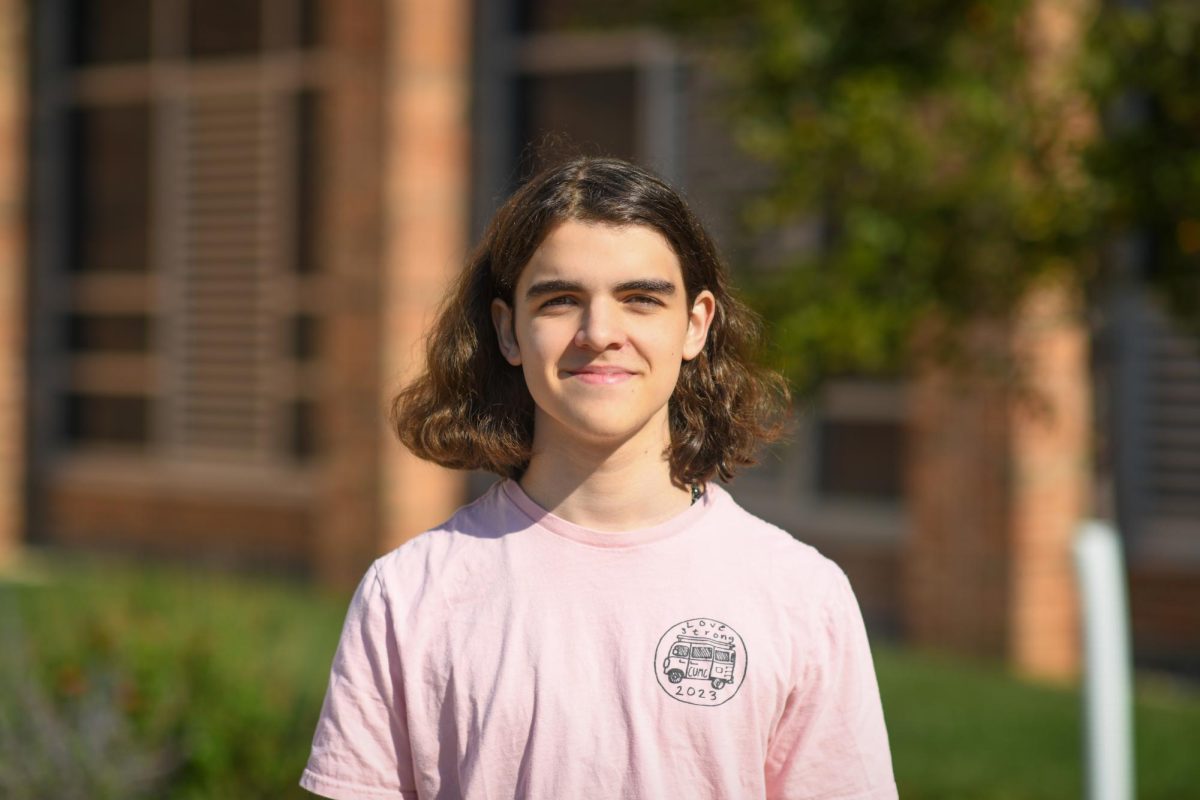
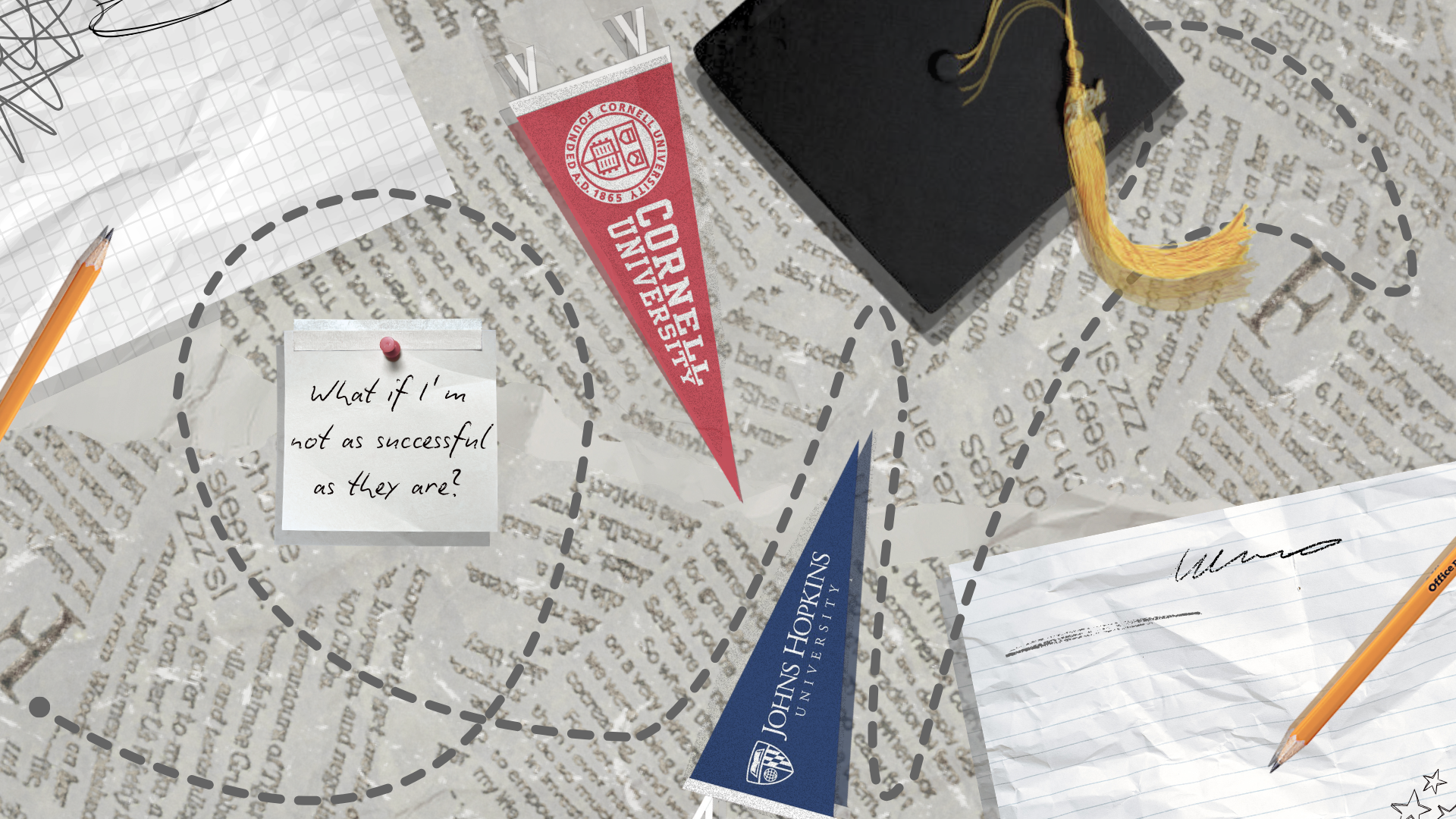
Being the youngest sibling of graduates from Johns Hopkins University and Cornell University isn’t always easy. “You must be so proud,” people tell my parents with jealousy in their eyes. All eyes turn to me, the youngest, the last one left. What they don’t realize is the weight of pressure I feel dropping onto my shoulders as I routinely plant a faint smile on my face.
Adults around me often point out that things are harder for older siblings because they don’t have someone older to follow or seek advice from. They say youngest siblings like me have it the easiest, since the path is already laid out and we have all the support we need to go on. But over time, this privilege started to feel like a burden.
Others began talking about my academics in relation to my successful siblings. They kept asking me what college I wanted to attend, clearly expecting an Ivy League or similarly competitive school. They asked me if I wanted to become a doctor like my dad and brother when I was too young to know the vast number of pathways I could actually take. They assured me that I would be successful because my siblings were. They cited my “good genes” and strong examples to follow. But my siblings’ intelligence and interests do not determine mine, and getting into a good college is ultimately just up to me.
Older siblings can connect to younger siblings in ways that parents often cannot. This allows them to guide them through many obstacles in their lives, offering important tips on study methods or applying to college. They can point out struggles they faced so that their younger siblings can avoid going through the same ones. However, this is not always the case.
With an age gap of 12 years with my older brother and 10 years with my older sister, I didn’t see either of them very often. I was only starting first grade when my brother left home to attend one of the highest-ranked colleges in the United States, and I only got to live with my sister for a few more years after that. Because my time with them was so limited, they weren’t people I could talk to every day for help by the time I started high school.
Fear of being the only child who was “unsuccessful” set in quickly. Doubts like, “Will my parents be disappointed?” and “What will other people say?” came up before any concerns related to dreams of my own. A brief moment of celebration after an achievement was quickly replaced by the pressure to push harder. Comments from adults around me weren’t building courage; they were creating insecurity.
It is also unreasonable to expect younger siblings to meet the same standards as their older siblings when, recently, college application processes have been changing rapidly. After many colleges enacted test-optional admission policies in response to the COVID-19 pandemic, the U.S. Department of Education reported that several competitive colleges, such as Harvard, Brown and Yale University, have reinstated SAT and ACT requirements.
This increase in standards of rigor in society has led to current students being pressured into taking many more honors and AP classes, with participation in AP courses and exams rising by 7% from 2024 to 2025. Not only this, but college acceptance rates have also declined in recent years, causing many students to panic about their chances of getting in. According to an EAB report, the number of college applications per student increased by 21% over just five years.
Nearly half of U.S. high school students report feelings of sadness or hopelessness. Consistently setting high standards and assuming they’ll be met simply isn’t right. Not all younger siblings will attend prestigious universities just because their older sibling did.
With our family’s track record for success already sitting in the back of our minds, we do not need more pressure in our lives.