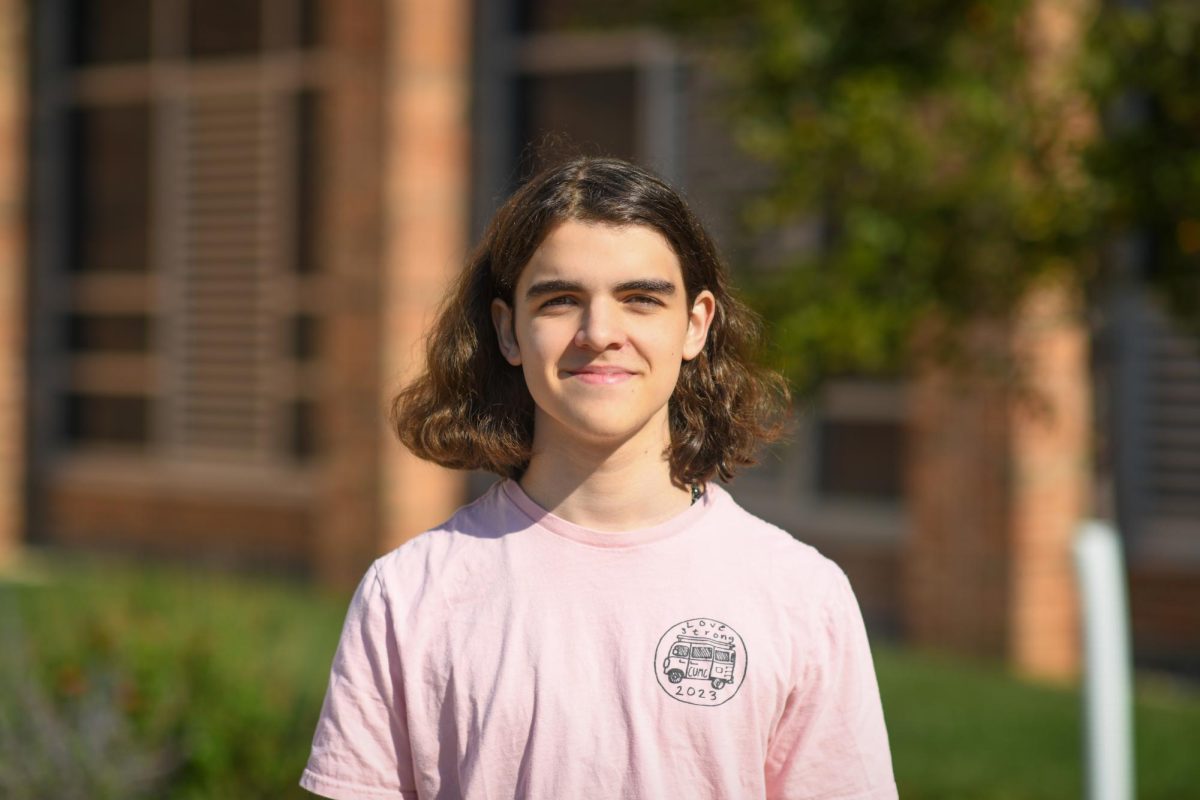


As an Iowan teen with a parent who immigrated from China, I have grown up surrounded by stories showing how deeply Iowa and China are connected. Xi Jinping’s decades-long friendships with Muscatine residents and Governor Terry Brandstad, along with Mo Yan (China’s first Nobel laureate in literature), who trained with Iowa’s International Writing Program, highlight the bonds between our communities.
I was also taught early by my parents that global trade has historically benefited Iowa’s economy, with soybeans grown here reaching dining tables across China. Yet the Trump administration’s tariffs caused significant struggles for Iowan farmers, showing how international tensions can directly affect everyday livelihoods. For me, the intertwining of my Iowan and Chinese roots carries a responsibility to remain engaged and aware globally.
In light of the Supreme Court’s ruling on tariffs, I felt hopeful that Iowa-China economic ties might stabilize. That hope, however, quickly turned to frustration when I learned that Iowa House File 2513 passed out of the House and was further advanced by an Iowa Senate subcommittee and committee earlier this month.
This legislation would prohibit “institutions of higher education from entering into employment contracts with citizens of federally designated foreign adversaries and state sponsors of terrorism holding certain visas.” In practice, this means that non-native workers holding H-1B visas from countries such as China could be banned from working at colleges and universities across Iowa.
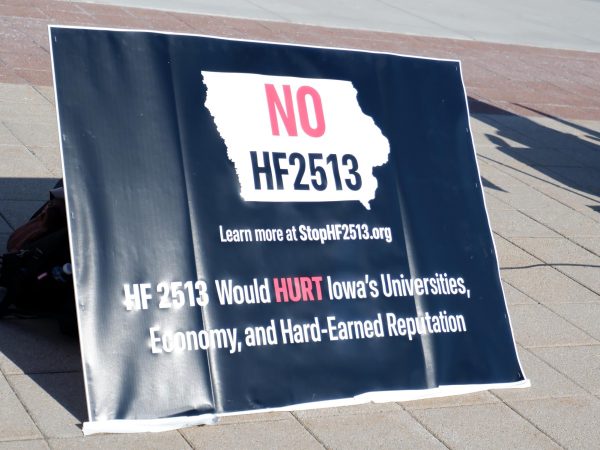
The H-1B visa allows U.S. employers to hire highly skilled foreign professionals in specialized fields like engineering, science, medicine and technology. It is designed for roles that require at least a bachelor’s degree and skills that are often in short supply and difficult to fill with domestic workers. In Iowa City, a majority of the Chinese community have previously held H-1B visas before becoming permanent residents and U.S. citizens. This visa serves as a pathway, bringing skilled professionals to the University of Iowa as researchers, professors and medical doctors while allowing them to make Iowa City their home. The Chinese community here is strong. I’m surrounded by many Chinese peers at West High, whom I know through family friends and connections.
At the sub-committee meeting on March 11, lobbyists told the Iowa Senate subcommittee members that state universities and community colleges remain undecided on the bill but are concerned about the risk of costly legal challenges. An officer from the Iowa Board of Regents emphasized that only a very small fraction of the roughly 30,000 university employees (about 120 to 130 individuals) hold H-1B visas, while warning that this hiring ban could expose institutions to lawsuits by conflicting with state and federal protections against discrimination based on national origin.
Despite these concerns, a lobbyist speaking in favor of the measure framed it as a “common sense” safeguard, arguing it is necessary to prevent sensitive research and information from falling into the hands of “potentially hostile” individuals. During the discussion, some lawmakers fixated on the small number of visa holders, suggesting that even “a few bad actors” could justify the legislation. They questioned whether allowing individuals who “may not be loyal to America in the same manner that we all are” to work or study in these settings serves the country’s best interests.
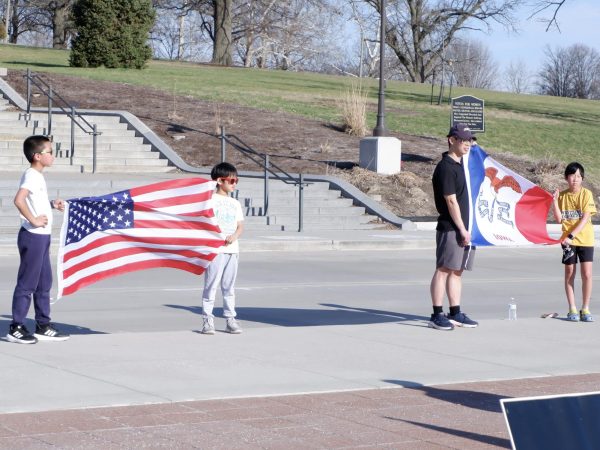
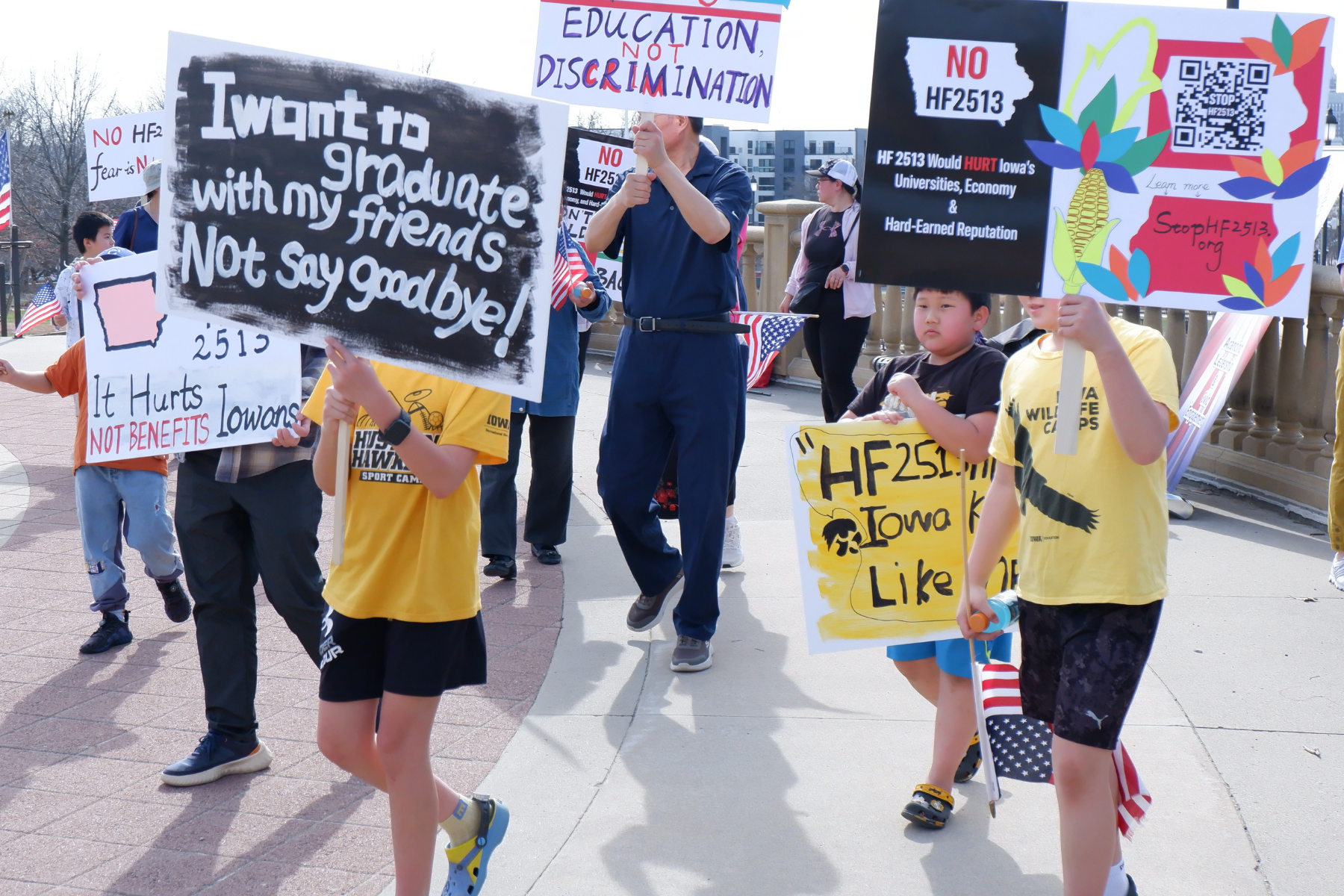
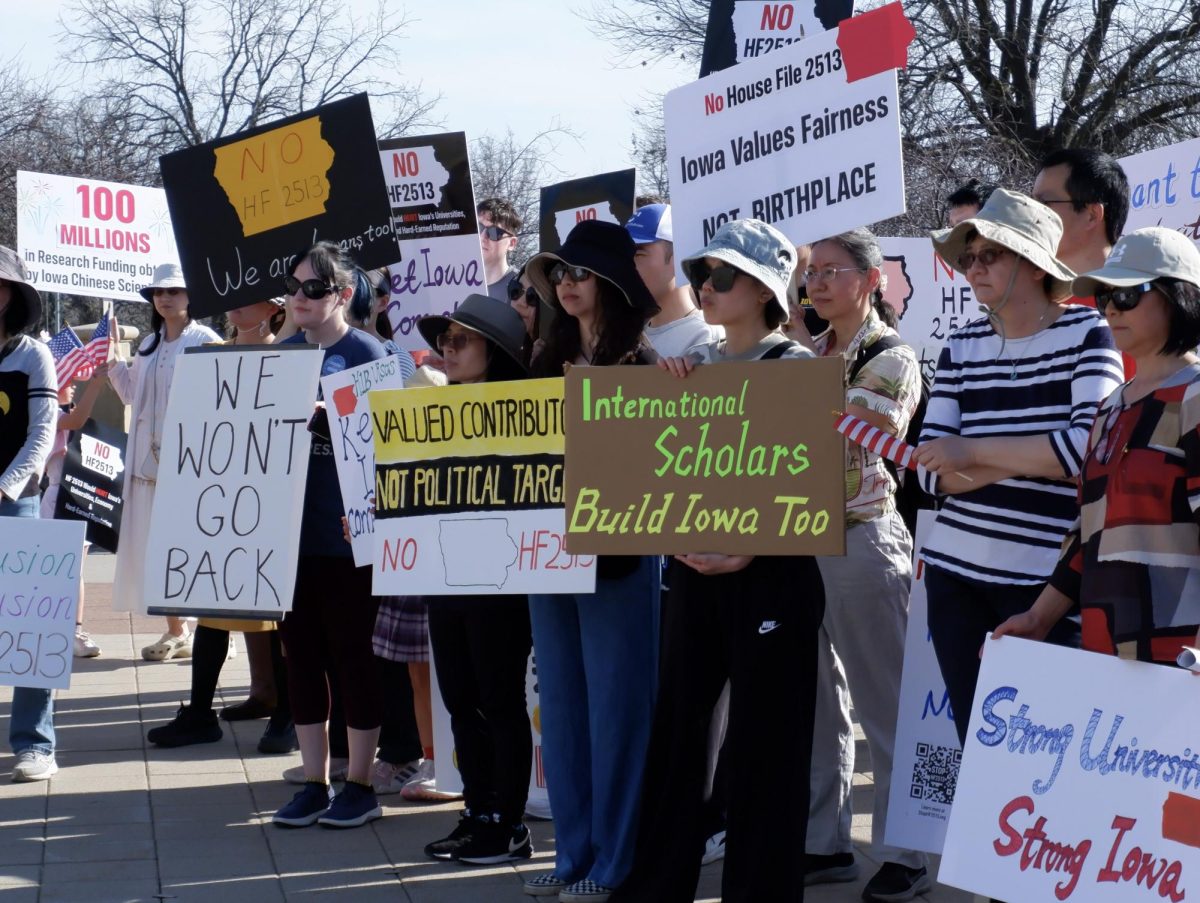
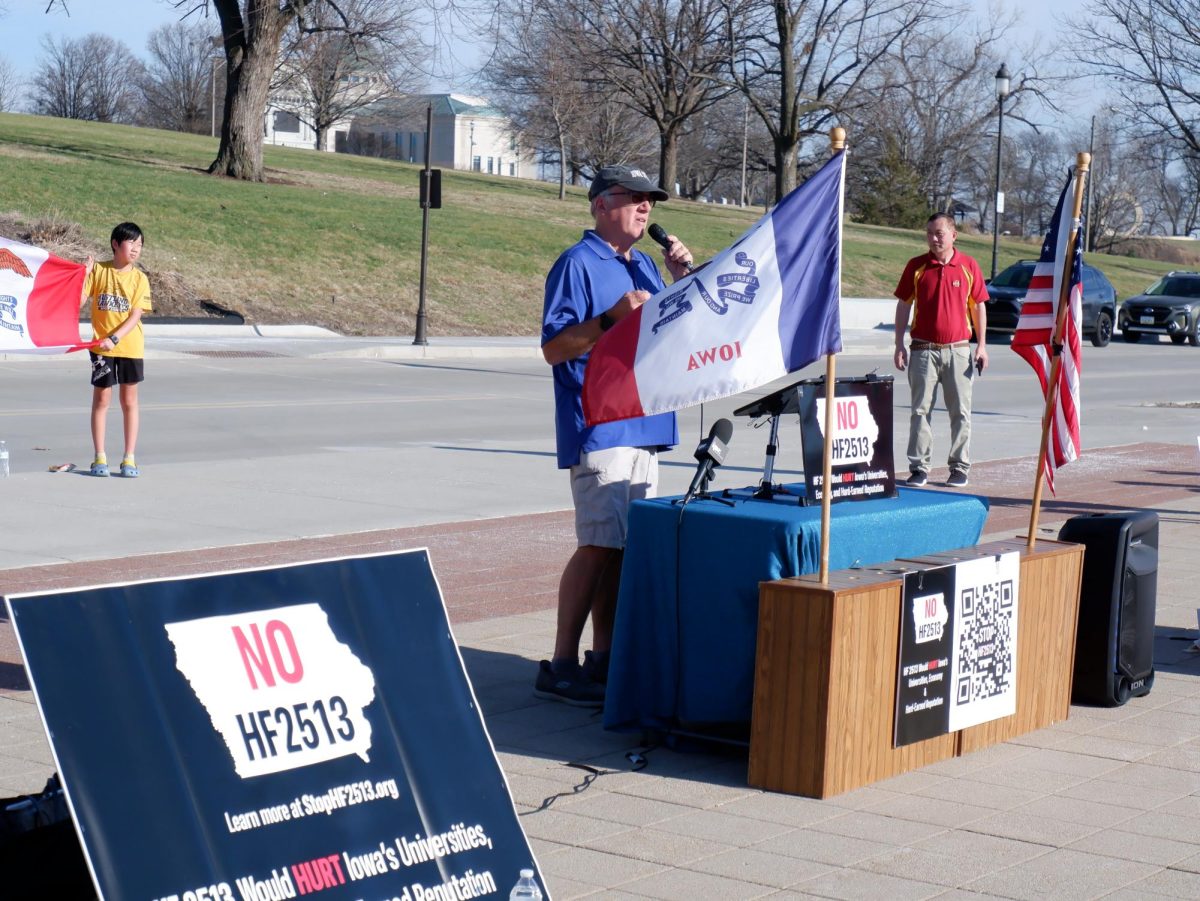
On March 21, I joined about 150 people at the Iowa State Capitol to protest HF2513. The group included Chinese H-1B visa holders working as researchers and professors in Iowa City and Ames, politicians, agricultural professionals, longtime residents who had participated in the H-1B program and pro-immigrant activists. During the event, I heard firsthand how Chinese scholars have contributed to Iowa’s higher education and economy and how this bill could jeopardize their work, affecting colleagues, students and the broader community. Speaking with fellow protesters, I learned about the many impacts of this legislation that extend far beyond what most people realize.
Kit Spangler, a leader in Iowa’s dairy industry, has spent his career leading China-focused business development and providing nutrition and marketing strategies for multinational companies. “If farm groups around Des Moines really knew what was in this bill, they’d oppose it,” Spangler said. “About a third of Iowa’s soybeans go to China; that’s a major market for us and we depend on it. Passing something like this sends a message that companies connected to Chinese workers or partnerships aren’t welcome. In agriculture, being global is crucial. The bill is not good for these companies either.” Spangler, a featured speaker at the event, also emphasized that the legislation would tarnish the legacy of Iowa’s longest-serving governor and U.S. ambassador to China, Terry Branstad, in building strong political and economic relations with China.
Among the protesters was Shuang Chen, a West High parent and associate professor in the University of Iowa’s Department of History. Chen underscored the social and psychological harm HF2513 would inflict on H-1B visa holders. “It casts a very negative light on Iowa in front of people in the country and in the world. Iowa will be seen as close-minded and xenophobic,” Chen said. “Finally, it will cause brain drain as such discriminatory law based on country of origin would make everyone feel unsafe and insecure. People currently working in Iowa would want to leave. The state universities will face a serious problem of faculty retention.”
Fellow West High student Jerry Li ’26 was also at the protest. He is concerned about the further stereotypes and harm to immigrants in our country. “I’m worried that the bill’s passing could lead to greater stigmatization of immigrants nationwide, especially with similar legislation banning H-1B already being enacted in Florida and Texas,” he said.
The reality is that students in families of immigrants such as mine and Jerry’s fear for what could come in the future, even if we have done nothing wrong.
HF2513 would also affect H-1B visa holders from other countries designated as “foreign adversaries,” including Russia, North Korea, Iran, Cuba, Venezuela and Syria. Xavier Carrigan, an Iranian descendant and English-as-a-second-language teacher who has worked in the U.S., Japan, South Korea and Saudi Arabia, voiced serious concerns. “It’s crucial to understand what a bill like this really does: it builds a wall, creates a divide and punishes people who’ve done nothing wrong,” he said. “It comes from the same mindset that led to Japanese internment in the 1940s: Targeting innocent people who are simply trying to be part of this society. Expatriates and immigrants are seeking opportunity, not trying to infiltrate. That basic truth is being lost, unfortunately.”
Carrigan is currently running for U.S. House in Iowa’s 3rd District against Zach Nunn.
As this legislation moves to the Iowa Senate for debate, I urge lawmakers and residents to recognize the dangers of policies built on discriminatory assumptions rather than facts. HF2513 does not reflect Iowans’ best interests and would undermine many foundations that allow Iowa to thrive.