


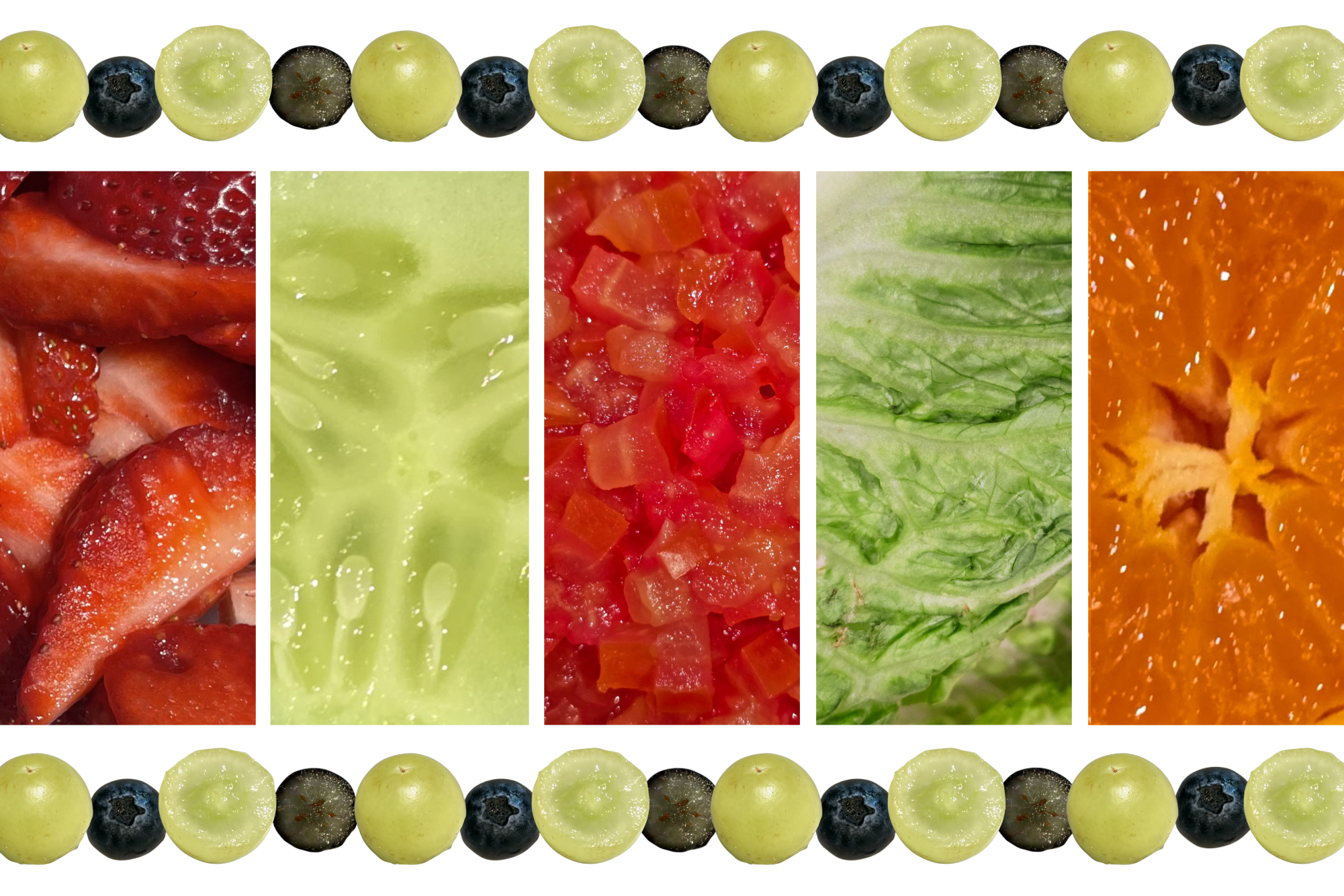
“Don’t forget to grab a fruit on your way out!”
As students leave the crowded West High lunch line with their sandwiches and Bosco sticks, they’re told to grab a fruit or vegetable if they haven’t already. However, more often than not, this mandatory serving gets tossed as students file out of the cafeteria. Students know the produce they are given is healthy and essential to their well-being, but most choose to ignore it, as it isn’t as enjoyable as the ice cream or chips available at the a la carte line.
Former First Lady Michelle Obama’s landmark 2010 Healthy Hunger-Free Kids Act rapidly changed the lunchroom environments, combating rising child obesity rates by increasing school lunch nutrition requirements. Requirements include implementing all main food groups — whole grains, fruits, vegetables, lean protein and low-fat dairy — in daily lunch options. Students and administrators criticized the program, as the food was said to be unappetizing and the costs and food waste were significantly higher. However, it also led to a 47% decrease in obesity prevalence among children in poverty from 2003 to 2018 compared to the expected rate previous to the implementation of the act.
One requirement of the HHFKA is that 80% of all the grains offered must be whole-grain rich, and the different nutritional subgroups must be represented on a weekly cycle. Alison Demory, the director of nutrition services at the Iowa City Community School District and a registered dietitian, explains how the act reshaped the district’s approach to food.
“They make you take a fruit or veggie every day before you check out, so that was something that people were a little upset about at first, but I was like, ‘How is it a bad thing that we’re making kids eat fruits and veggies?’” Demory said. “They had calorie, sodium and some fat limits. By virtue of that, they start healthy.”
To reach these guidelines, the ICCSD partners with local organizations, including Field to Family, a nonprofit food hub and market in eastern Iowa that aims to ensure Iowans can eat healthy, locally produced foods. The group connects the district with local farmers, expanding the range of fresh produce available to students. Planning for this process, though, begins months in advance.
“I grew up on a farm, and I knew where my food came from, so I think that’s important that we help educate on where our food comes from,” Demory said. “We met this winter [with Field to Family] to start talking about what they can plant for us and what we would like to see on our menus. We’re always looking for a nice variety of local produce. When we come back in August through October, we have the highest percentage of Farm to School produce available. It’s something we’re committed to.”
Demory believes it is the district’s responsibility to educate students about healthy eating habits through a diverse range of food options.
“As a dietitian, I feel very strongly that we shouldn’t teach kids good or bad [foods], but learn to eat a variety of foods and to eat in moderation,” Demory said. “When we label foods as good or bad or avoid certain groups of foods, that can lead to an unhealthy relationship with food and can result in some eating disorders and other problems along those lines. We are all in on providing a wide variety of food.”
However, this range of food options isn’t universally available. Many students across the ICCSD eat with religious, cultural and dietary restrictions in mind, limiting their options. Demory explains how the district accommodates those restrictions — and where it falls short.
“We have a main and an alternative, and if pork is the entree, the alternative would not contain beef or pork to accommodate students with those kinds of religious preferences. We have our limits for things like gluten allergies — some students are so sensitive we can’t accommodate [them],” Demory said. “If somebody had a severe gluten restriction, I would tell that family, ‘You’re going to need to pack something because anything we make in our kitchen is going to have some level of exposure to gluten.’ We want to keep kids safe, and I don’t want to mislead families into thinking something is safe when it might not be”.
West chemistry teacher Megan Bildner navigates strict dietary restrictions due to her diagnosis of Crohn’s disease — a chronic inflammatory disease that causes swelling or ulcers along the digestive tract. It affects an estimated 1 million people in the United States and prevents Bildner from eating raw fruits and vegetables, whole grains, fatty or fried foods, and foods high in acidity.
Bildner has worked through these struggles since her senior year of high school and found that her options have expanded since.
“It was really hard at the beginning, because [I was] trying to figure out how to adjust. There weren’t a whole lot of vegan products or fake dairy products that now exist, so it was a whole lot of eating ham sandwiches with bread,” Bildner said. “Now, I think I have a lot more freedom than I did then. It was a lot of eating the same thing over and over because I knew that those foods were safe.”
As Bildner adjusted to her dietary restrictions, she learned what worked best for her body while still fulfilling her nutritional needs.
“I’m more aware of what’s in certain products; I pay more attention than I ever would have before,” Bildner said. “I also try to balance my meals. I know I’m not getting some of those nutritional needs that are often found in dairy.”
Over time, Bildner’s dietary restrictions have allowed her to become more creative in what she cooks — especially with her favorite baked goods.
“I was always a big baked goods person, so thinking about other ways to bake made me more creative,” Bildner said. “For so long, I cut everything out, and now being able to add some of those things back in, with different types of milk, I feel like I’ve actually expanded my palate where I [previously] had closed it off so much.”
For many students, lunches are tied to their cultures. Duru Akgun ’29, being Turkish, grew up eating the Mediterranean diet based around plants, whole grains and healthy fats. Along with feeling closer to her culture, she explains how the diet — specifically when in Turkey — helped her stay healthy.
“Whenever we go, we eat Turkish food. It’s a lot healthier,” Akgun said. “I eat the same amount, but I lose weight because there are more natural ingredients in the food and there are smaller portions.”
In 2025, the U.S. News & World Report ranked the Mediterranean diet the best overall for the eighth consecutive year due to its ability to reduce the risk of chronic diseases, aid weight loss and provide overall wellness benefits. Akgun explains how eating traditional Turkish food changes how her body functions.
“Whenever I go to Turkey, my skin is always clear, I lose weight and I feel more energized because the food is less salty [and] the desserts are less sweet. You can find unhealthy food in Turkey, but the authentic Turkish food always has better ingredients in it.”
Akgun also emphasizes the difference between Turkish and U.S. desserts, specifically in their respective sweeteners.
“We have different things made of cheese and puff pastry. Most of the sweetness comes from natural sweeteners, like honey, so it’s not as artificial as it is in America,” Agkun said.
Along with being healthier, the Mediterranean diet is much easier to follow than fad diets — characterized as popular and short-term food restrictions that rarely lead to long-term health benefits — as it doesn’t restrict calories or certain foods altogether. Instead, it focuses on eating nutrient-dense foods that are high in fiber and healthy fats rather than foods high in sodium and saturated fats.
Akgun believes that better dietary choices compound over time.
“A diet is a big part of who you are as a person,” Akgun said. “You have to eat, and if you eat well, then your life is better.”