

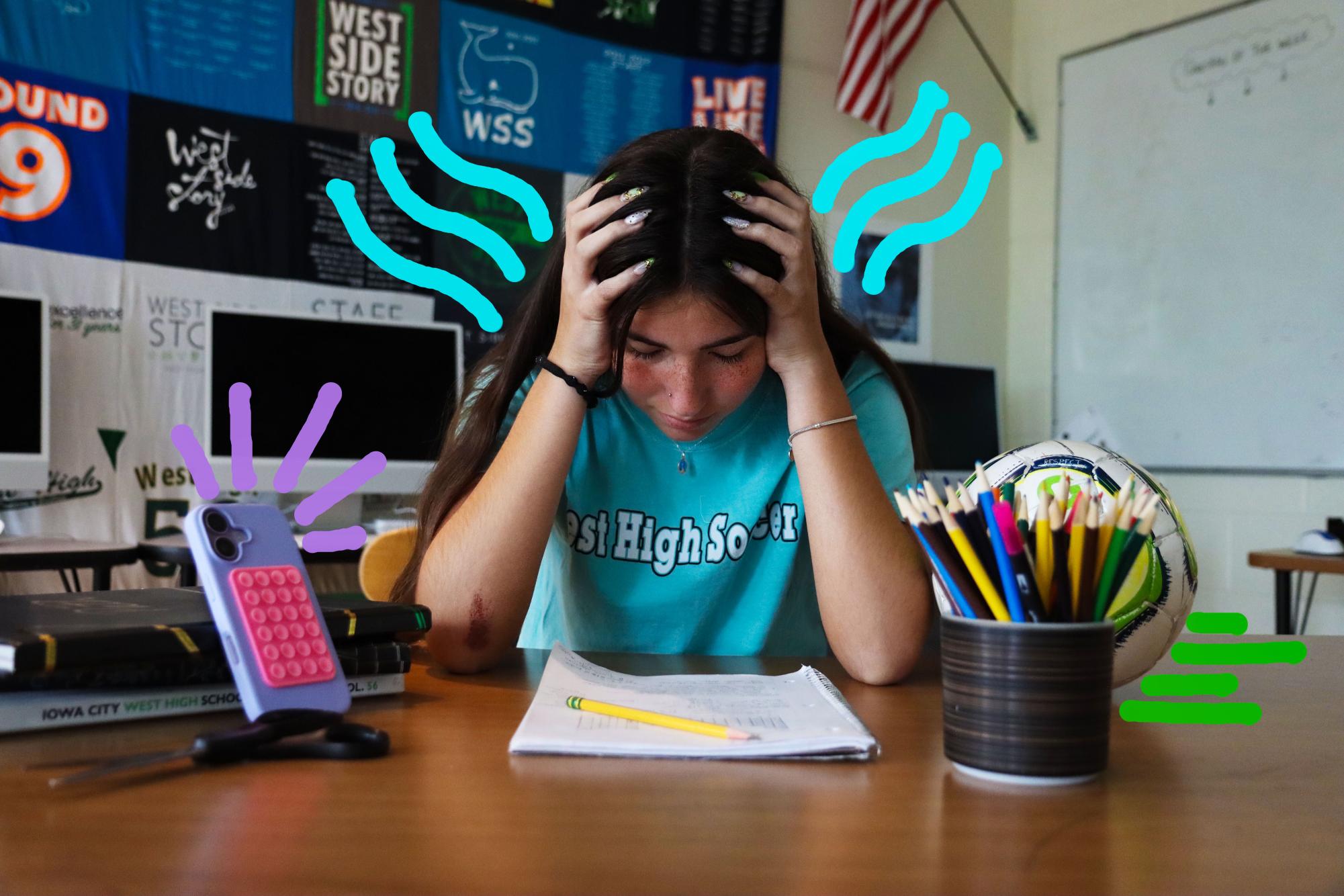
She took one step forward to give chase to the ball, but something felt off; the world was spinning, and her vision was blurring. Instinctively, she tried taking another step, but she felt like a wave just pushed her off balance.
Now facing the bench, her coach reached out his arms in an attempt to signal the referee. She collapsed to the ground, not to play again for the rest of her season. Amaia Martinez ’27 had suffered yet another of one of the most common, and most dangerous, injuries known to the world of sports: a concussion.
Martinez has always been an outstanding personality and she soon distinguished herself as an avid member of the West High community by being a high-achieving student and a leader for the soccer team. In particular, her positive energy and competitiveness gained the attention of teachers and coaches alike, and set her apart from other students.
“She’s very competitive and she’s very passionate,” said girls soccer Head Coach Zach Serovy.
Playing for West High under Serovy during the 2024-25 season, Martinez had gone up to head the ball out of West High’s defensive half in a regular season game when she misjudged the trajectory of the soccer ball, resulting in a hard collision with the lower region of her forehead that caused a concussion. This wasn’t Martinez’s first concussion, nor her second. It was her third within the last five years. Less than a year later, in the winter of 2026, she would suffer yet another.
Despite concussions being the most common form of traumatic brain injury and being extensively studied for over 150 years, leading scientists and research institutions still agree that the effects and science behind concussions have yet to be fully discovered and understood. This is in part because concussions are experienced extremely differently from person to person. In some cases, people who experience a concussion walk away with only a temporary daze that goes away with time and rest. For others, a concussion could mean that they will never be quite the same physically or mentally.
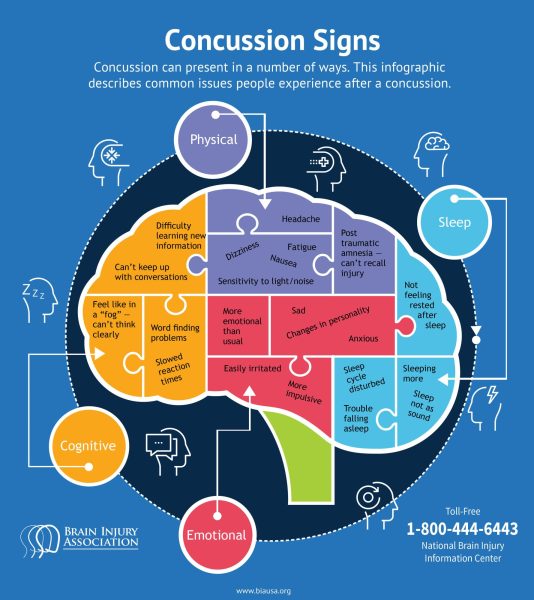
Martinez started experiencing severe symptoms like chronic headaches, difference in general mood, memory loss and difficulty with balance and coordination following her last concussion. As a result of the severity of her injuries, Martinez has had to struggle her way through multiple lengthy periods of recovery, each one costing her time that took away from her academic, social and athletic experiences in and out of school.
One of these passions is soccer. Martinez has played soccer ever since she was young. She started her journey at the Iowa Soccer Club and from early on was a skilled player, making the top team early on and helping ISC to a state title. As she entered into high school, she was put on the starting 11 for the girls varsity soccer team and continued being an essential part of all her teams.
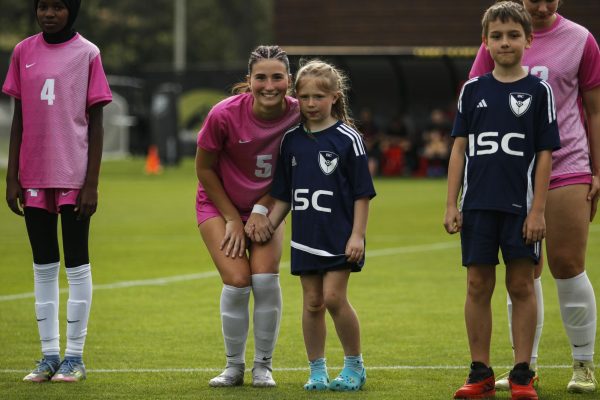
But after her concussion in the 2024-25 season, the continuation of her athletic career was questioned.
Because concussions vary on a case-by-case basis, medical professionals have come up with a scale used to categorize concussions based on their severity, with grade one concussions being the least severe and grade three being the most. The symptoms of grade one concussions commonly appear as confusion, enhanced sensitivity or lack of sensitivity to light and noise, nausea, trouble with balance and inhibited coordination. These symptoms are frequently only temporary, and patients with this grade of concussion are expected to experience very little to no symptoms after a year or sooner, according to research done by the University of Utah.
Grade two concussions are characterized by similar symptoms, but have longer recovery times and a higher possibility of longer-lasting impacts. Grade three concussions have more extreme symptoms, with people experiencing memory loss, seizures, long-term change to personality, long-term difficulty maintaining focus, chronic headaches and deterioration of motor skills like speech and thought. These symptoms can stick with an individual for multiple years or, in some cases, their entire life.
Following several appointments with medical professionals, it was determined that Martinez had suffered a severe concussion and was suspended from all contact sports until doctors recorded symptom improvement. But with all her previous concussions and the severity of her symptoms, there was a chance that Martinez would never return to the pitch.
Along with sports, Martinez also began seeing the effects of her concussion creep into her academic career. Symptoms like chronic headaches coupled with memory loss and a lessened attention span made it increasingly difficult for her to concentrate and keep up in class. The amount of school that she had missed because of the concussions amplified the work as well as her stress.
“I’ve lost a lot of focus, and my memory is more iffy than it used to be. Sometimes someone will tell me something that I said, and I’ll be like, wow, I don’t remember that,” Martinez said.
Martinez noted that the stress was oftentimes overwhelming and that she has felt discouraged after having to go through a long recovery process that put her behind in school only to catch back up and suffer yet another concussion, setting her back once more.
“Going through each concussion has been mentally taxing for sure as well. … It feels like my progress keeps getting reset every time,” Martinez said.
Martinez also highlights that one of the most difficult parts of recovering from a concussion is the sheer amount of communication that is needed to help people like teachers and coaches understand the weight of the injury and what comes with it.
Although it was difficult, Martinez explains how thankful she was to have the support of her parents, friends and teachers, who understood the seriousness of the issue and remained patient with Martinez until was able to resume her activities fully.
“Luckily, everybody was really nice a patient with me, which I’m super grateful for,” Martinez said.
She believes that her parents in particular played a big role in helping her.
On top of the academic and athletic drawbacks, Martinez also faced changes socially as a result of her concussions and altered personality. She expressed that she felt more “mellow” and calm now, whereas prior to her concussions she described her personality as more outgoing and extroverted.
‘I feel like I have mellowed out as a person. I am more calm,” Martinez said.
Martinez says that these changes didn’t really affect her relationships with people, but did impact her perception of the world around her and her interactions with individuals. Martinez articulates that she gained an appreciation for her life and the people in it. She mentions that there was a lot of hardship that came with her concussion journey, but a positive thing that was born out of the hardship was the feeling of enlightenment surrounding everyday life.
Just prior to the 2026 spring soccer season at West, Martinez was cleared to go back to full contact sports. Her lost time on the ball and in the classroom has proved challenging for her, but with the support of loved ones, teammates and medical professionals behind her, she has been recovering well and is back to helping West’s soccer team advance into the state qualifying rounds and to being the model student she always was.
Amaia Martinez’s journey at West High has been derailed time and time again by her injuries, injuries that have threatened to end her participation in sports, slowed academic progression and have altered her personality and outlook of the world. She has fought to get back to where she was prior to her concussions more than once or twice, each time discouraging her more and more. But through all the adversity, Martinez believes that far and away the most important part of her story is that she won’t let her concussions define her.