
































Who is Chris Jones?
What does he want to change?
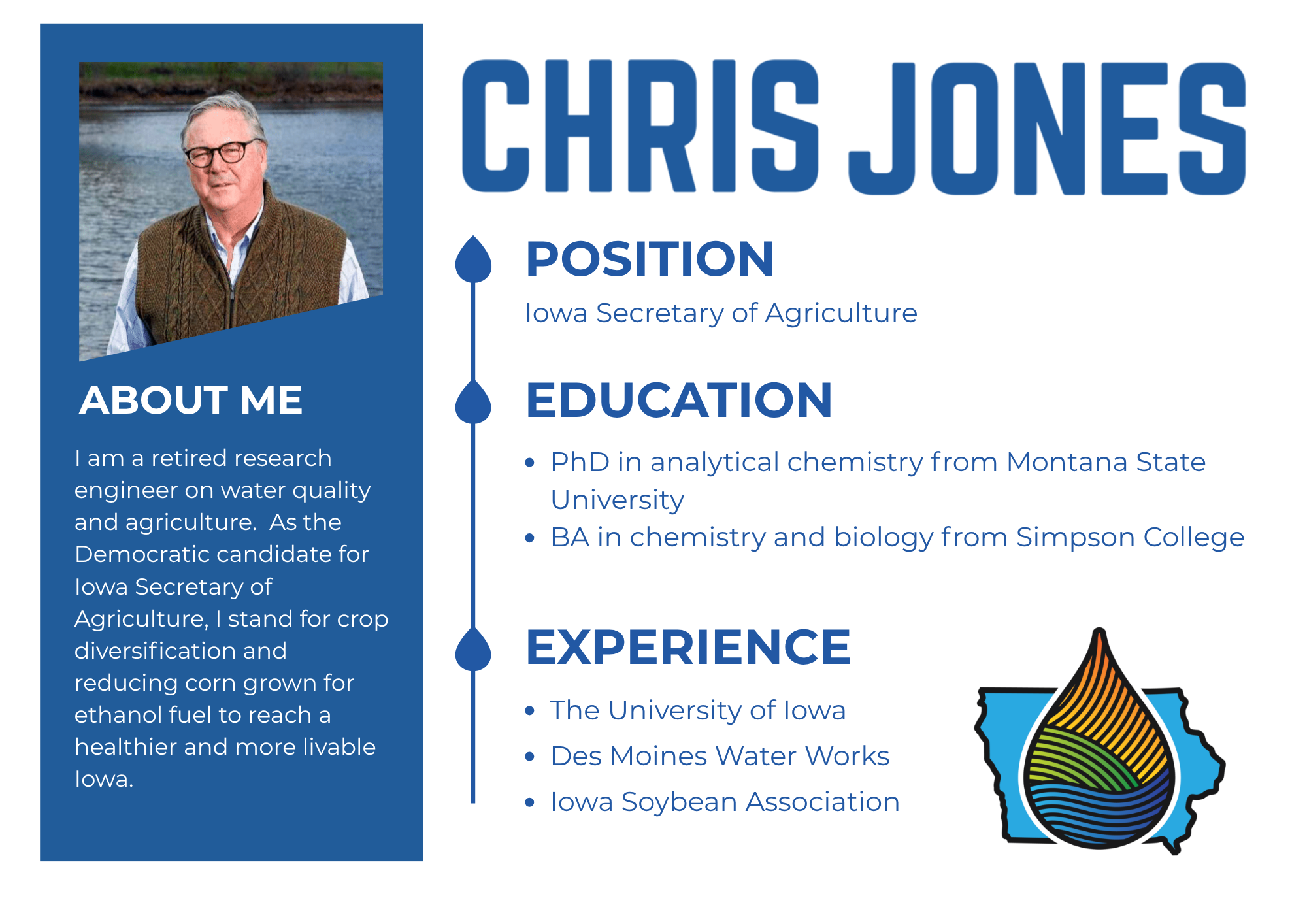
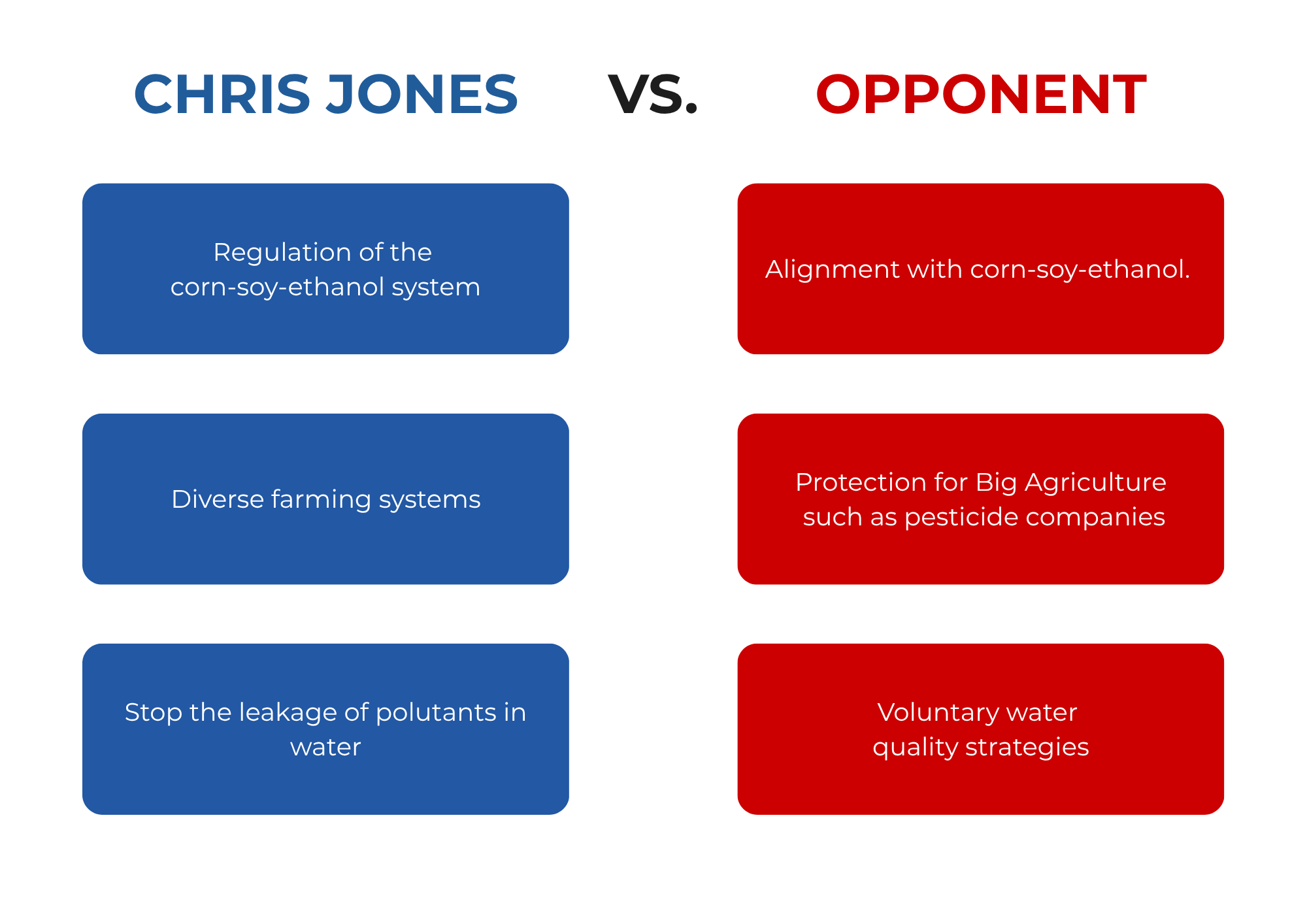
Agriculture controls about 84 percent of Iowa’s land, yet the state’s farming industry depends heavily on just two crops: corn and soybeans. Iowa ranks first nationally in corn production and second in soybean production. Jones, however, has become a prominent critic of the corn-soy cropping model that has defined the iconic Iowa landscape for decades. He argues that the over-application of manure and pesticides associated with the model has severely damaged Iowa’s water quality, particularly through nitrate contamination in drinking water. Many Iowans believe the polluted water is contributing to the state’s rising cancer rates. In his opinion, the system is also economically fragile, especially when fertilizer, fuel and seed costs rise or when crop prices fall.
Jones also questions Iowa’s long-standing emphasis on ethanol production, which burns corn into a biofuel that is blended into gasoline to power vehicles across the United States. Around one-fourth of Iowa’s land is used for ethanol production. As electric vehicles become more common and younger Americans drive less overall, Jones expects the demand for liquid fuels like ethanol to decrease. Because about eight million acres of Iowa’s land is devoted to growing corn for ethanol, he argues the state will eventually need to transition those spaces to alternative crops or other uses.
What is his solution?
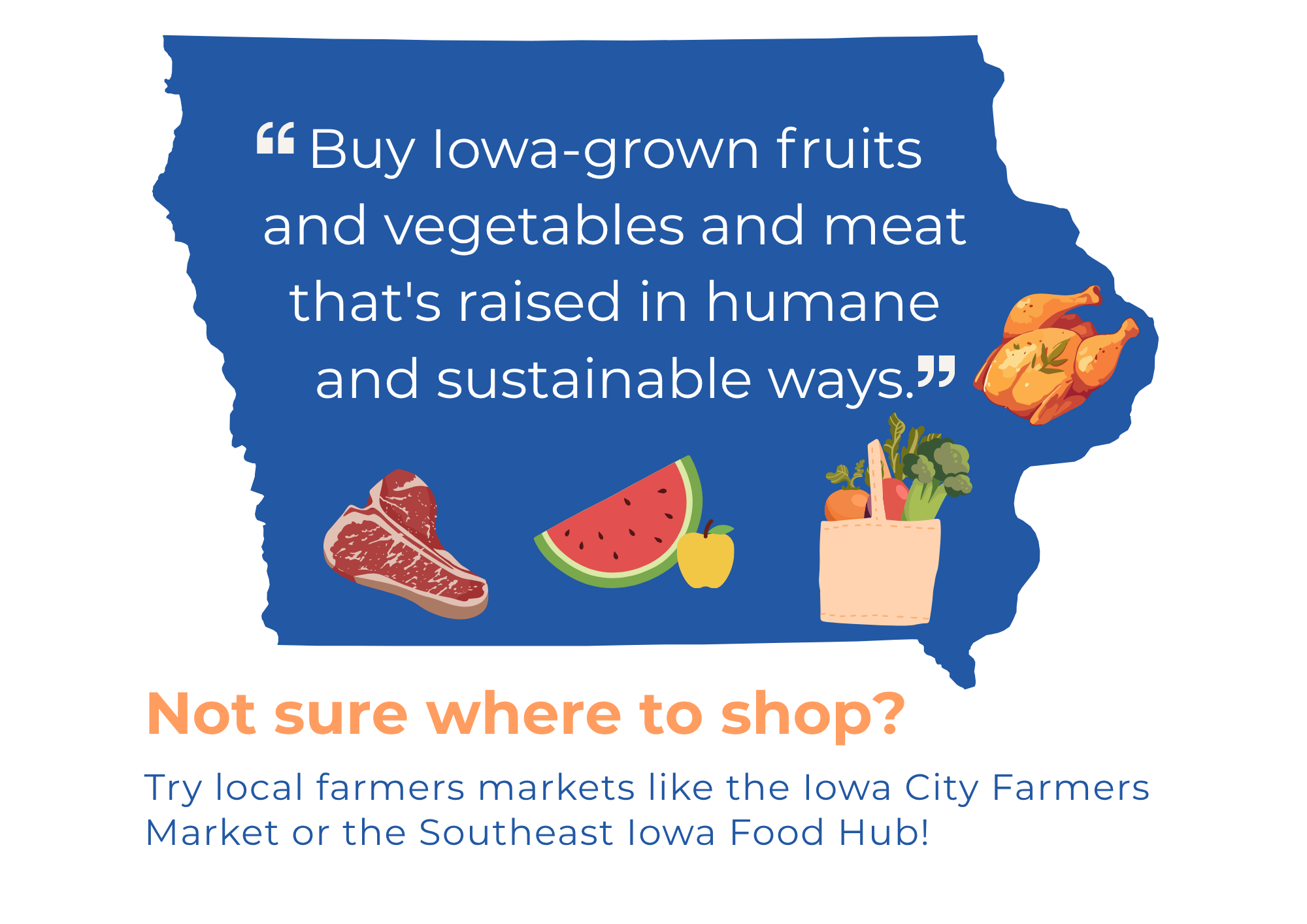
To address the shortcomings of Iowa’s corn-soy-ethanol system, Jones advocates greater farming diversification. Rather than relying almost exclusively on corn and soybeans, he argues that farmers should incorporate a wider variety of crops into their rotations, including oats, alfalfa, clover, wheat, barley, fruits, and vegetables. He also believes that raising high-value livestock, such as grass-fed beef and pasture-raised pork, could further strengthen Iowa’s economy. According to Jones, diversification would not only improve soil health and reduce water pollution but also strengthen the long-term economic resilience of farms by opening new markets and reducing dependence on a narrow, highly vulnerable agricultural system.
What makes him different from his opponent?
What is his advice for West students?