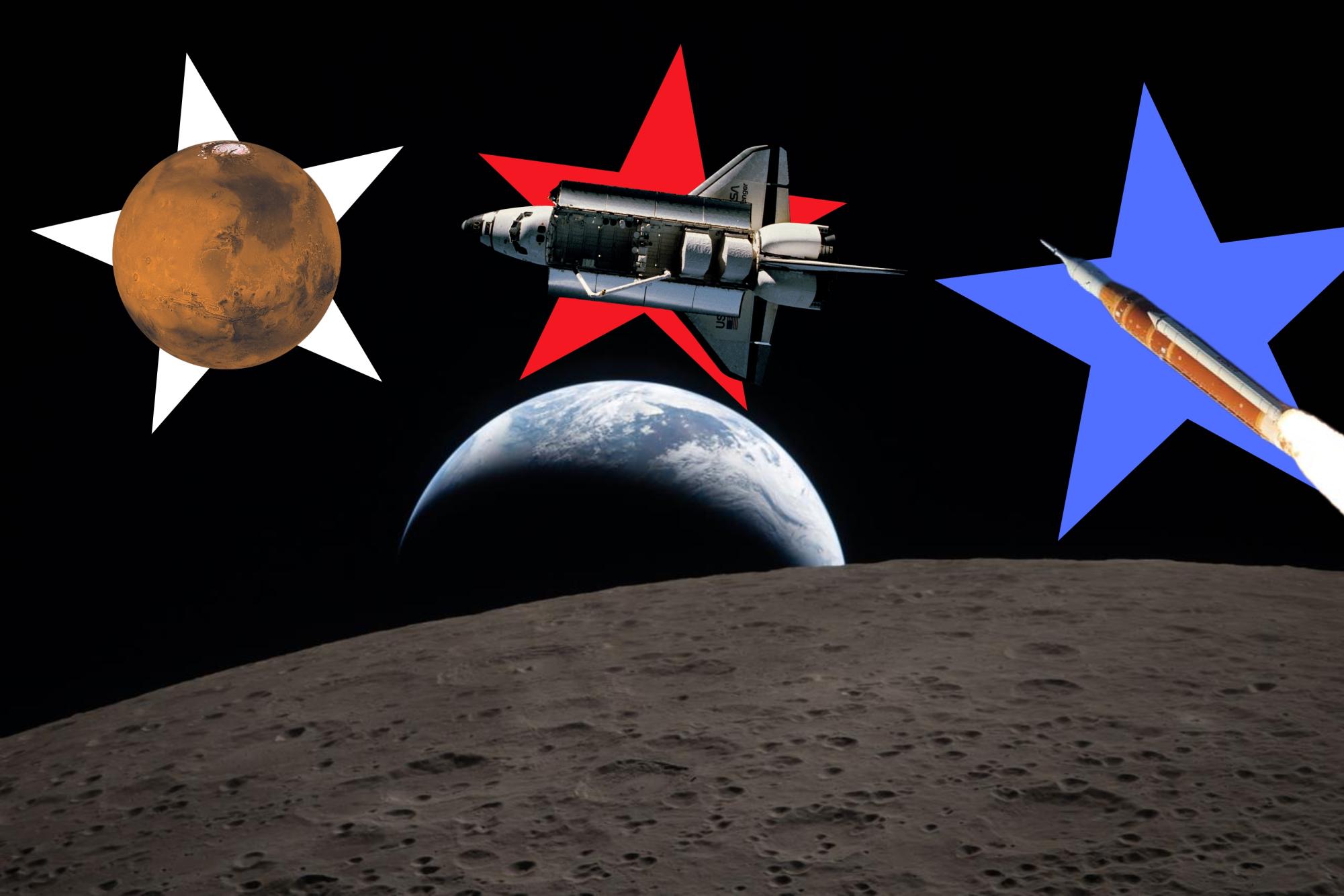



“One small step for man, one giant leap for mankind.” Spoken by Neil Armstrong during the first moon landing July 20, 1969, this sentence marked a monumental shift in space exploration throughout the late 20th century. After former President John F. Kennedy’s presidency ushered in the Space Race — which promoted increased competition in the American and Soviet Union Cold War rivalry to achieve superior spaceflight capability — and the final Apollo 17 mission in 1972, human exploration of the Moon largely stalled for decades due to unsustainable costs, with each launch costing around $4 billion.
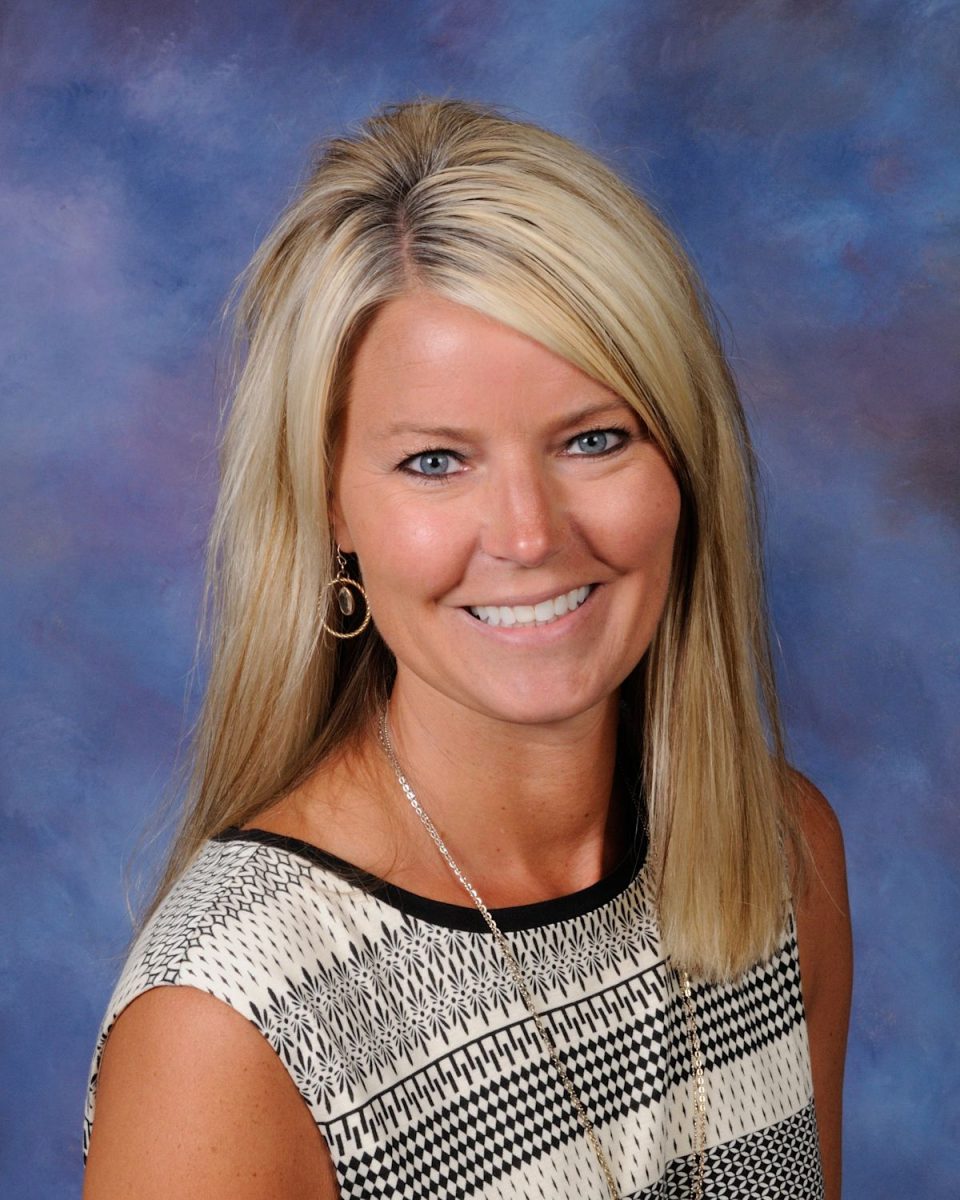
Now, interest in space exploration is skyrocketing due to growing uncertainty surrounding Earth’s climate and the opportunity to expand into new frontiers. Driven by both governments and private companies, space innovation continues to experience intense international competition. Many West High students, including Dylan Frisvold ’27, have observed the recent uptick in aerospace advancements contributing to the commercial space boom.
“Space is going to become the new frontier of human exploration. If you look at history with colonialism, it was the European countries challenging each other to get to the new land,” Frisvold said. “That competition appears in space as well. With high political tensions with other countries, the space race is still going to be something that countries will do to show their power and resources.”
For Frisvold and his classmates in West’s aerospace engineering course, much of the class discussion has centered around NASA’s current lunar program, Artemis. Created to establish a long-term, sustainable presence on the moon, the program is currently sending astronauts and spacecraft to explore areas of the moon for scientific discovery and economic benefits. The Artemis II flight, launched in April 2026, was a 10-day lunar flyby to test the National Aeronautics and Space Administration’s deep space capabilities with the spacecraft Orion. West Aerospace Engineering teacher Keith Kraeplin believes the information collected from the Artemis missions will allow for crucial documentation of the moon.
“One of the first places they plan on setting foot [is] on the polar ice caps,” Kraeplin said. “The ice captures the events [leading to] the creation of the moon and the impacts that have happened; then, they can chronologically see what has been happening to the moon since it’s been there.”
The Artemis missions also strive to implement infrastructure in space, outlined by plans with the Lunar Gateway, a space station intended to orbit the moon and support future missions deeper into the solar system. Frisvold believes that advancements like the lunar station could one day help astronauts pursue deep-space exploration.
“Once [NASA] eventually sends humans to Mars, the [Lunar Gateway] could work like a checkpoint for future missions,” Frisvold said. “That [station] is where they could do all sorts of studies in space.”
For years, NASA has relied on a vast network of partnerships with private companies and universities across the United States, including the University of Iowa. Iowa has become the home to the Tandem Reconnection and Cusp Electrodynamics Reconnaissance Satellites, where researchers have been developing and testing satellites through collaboration with NASA. The program’s primary goal has been to discover how Earth’s electromagnetic field works to protect humans from the effects of space weather events. In the summer 2025, two rockets were successfully launched as part of the TRACERS mission to collect measurements for further exploration of the attraction between the Earth and the sun. Jasper Halekas, the TRACERS electron instrument lead designer, describes his hopes for what the Artemis mission will bring for future discoveries on the Moon.
“I’ve been involved in proposals to put experiments to measure charged particles and electromagnetic fields on the surface of the moon. The [moon] doesn’t have much of an atmosphere, so the space environment interfaces right with the surface and is bubbling with electromagnetic activity. There are electric fields, plasma phenomena and dust that is electrified and moving around above the surface,” Halekas said. “Astronauts would want to know if there’s dust moving around, or electromagnetic fields charging up objects or robotic systems.”
To protect astronauts from these potential electric fields, Halekas has developed a viable solution to ensure the astronauts’ safety while studying these phenomena.
“Scientific experiments can predict when there’s going to be a nasty, charged particle storm,” Halekas said. “The astronauts can take cover in the safest environment, [which involves] going inside as much water as they [possibly] can, because water is a good way to concentrate mass and stop radiation.”
Following the end of the Kennedy era, space funding saw declining budgets throughout the 1970s and into the 21st century. Most recently, President Donald Trump proposed a $6 million cut for the 2026 fiscal year as part of his agenda to reduce government spending at NASA. While this proposition ultimately failed, NASA still saw a 1.6% reduction in funding, showing a downward trend for the second year in a row. Halekas debunks some common assumptions that people have about space funding.
“People tend to think that we spend a lot of money on NASA, but actually, it’s a tiny fraction of our national budget. We spend 0.3% of our national budget on NASA, which, if you compare it to back in the Apollo era, we spent [4.41%] of our national budget on NASA at that time,” Halekas said. “The fact that there are limited resources is what has caused the most delays for programs like Artemis.”
Halekas explains how TRACERS’ dependence on government funding has impacted their ability to construct the satellites.
“We don’t have unlimited deep pockets to try everything imaginable and see what sticks on the wall. We do a limited form of that [by] doing a lot of testing on the ground to try to break things before we launch them to make sure they won’t break in space,” Halekas said.
This lack of federal funding has stalled the progression of space exploration, causing NASA to form collaborative agreements with private companies instead. NASA’s partnership with SpaceX began in 2006, and since then, has led to numerous spacecraft being launched. Halekas recounts how this partnership has benefited space research and the TRACERS program.
“With the advent of companies like SpaceX, Blue Origin and others, the efficiency of launching things into space has gotten a lot better. That’s something that [TRACERS] benefited from, because we launched on a SpaceX Falcon Nine,” Halekas said.
With aspirations of becoming an astronaut, Frisvold explains his hopes for the commercialization of space travel to enable more opportunities for people to adapt to the challenges it comes with, including the gravitational force during acceleration.
“It’s difficult to transport [people] with all the different challenges of getting them ready for G-Force. You have to come up with these new technologies to allow that to happen safely, and also [have it] be a repeatable process,” Frisvold said.
Frisvold describes how previous space missions inspired him to pursue aerospace engineering as a career path.
“I was going into ninth grade, and I didn’t know what I wanted to do. I took Principles of Engineering, and a lot of friends [loved] aerospace engineering. Then I was with my dad, and we watched the [Apollo 13] movie, which is about the famous spacecraft,” Frisvold said. “It had issues during its flight and ended up having to recalibrate and do a slingshot maneuver around the moon to get back to Earth. That movie was when I realized that I liked aerospace, and that was what I wanted to do.”
For students at West studying aerospace courses, the renewed momentum in space exploration offers valuable frontiers for classroom lessons. Frisvold notes that recent class projects have focused on how space agencies design launch systems using computer-aided design software, such as Fusion 360.
“We’re currently designing model rockets in Fusion 360, and we’re going to use 3D printing and wood-cutting lasers to make them and launch them,” Frisvold said. “We’ve talked a lot about different NASA rockets: how [engineers] went through that process of designing the different Apollos, the Artemis missions and getting inspiration from NASA’s designs and builds.”
Frisvold reflects on the factors driving his motivation to continue exploring space in the future.
“Every kid dreams of stepping on the moon. They see the stars in the sky, and every kid [has] natural curiosity, [so] they want to learn more about them,” Frisvold said. “I’ve tried to keep that [curiosity], and I think being an astronaut would be the coolest thing. As I take more aerospace classes, and as I’m going to go into college, that is going to be the goal I have in mind to ready myself and prepare in every way I can.”