





























This story was published in the Oct. 10 edition of the West Side Story with the name “Serving change.”
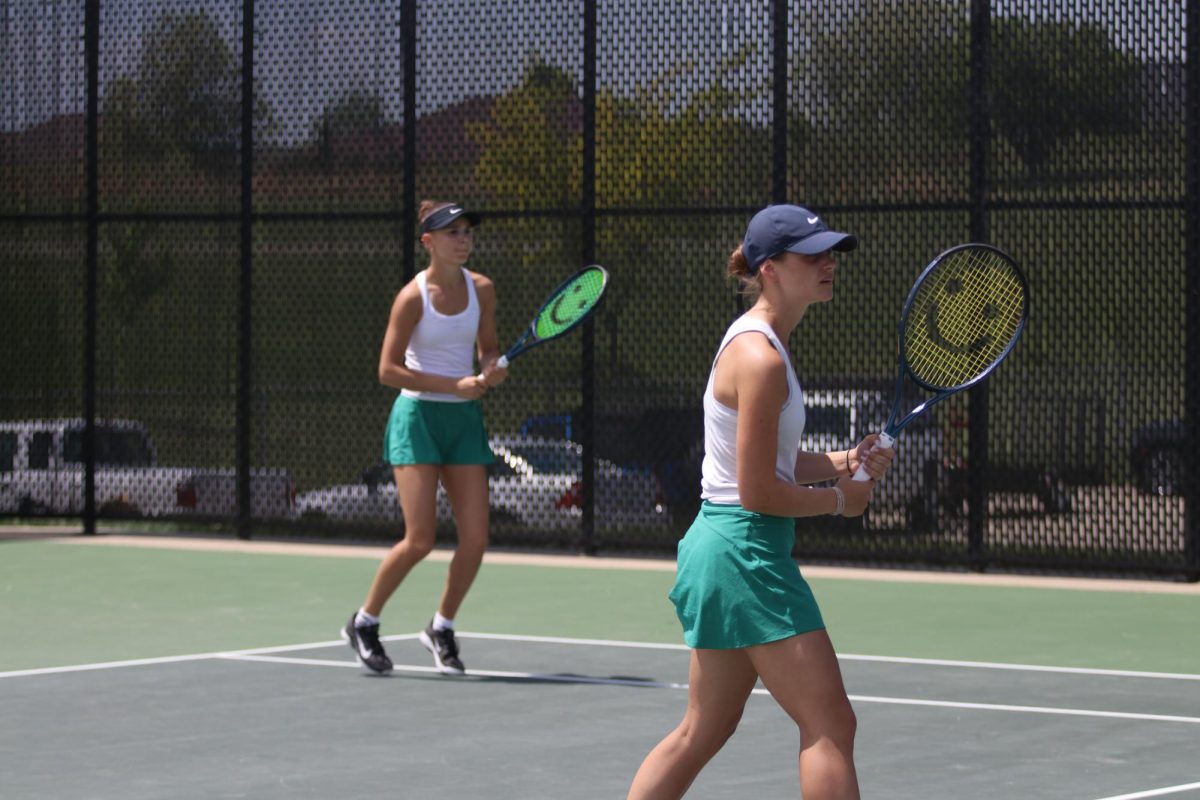
For the first time in nearly 70 years, Iowa high school girls tennis is no longer a spring sport, with the inaugural fall season kicking off Aug. 7 for the West girls tennis team. The shift from the spring to the fall has brought challenges and adjustments for athletes at West High and across the state.
Iowa High School Girls Tennis Internal Operations Coordinator Elise Boulton describes how conversations initiating the transition of girls tennis from spring to fall, sparked two years ago between coaches and athletic directors.
“We had a survey of athletic directors and coaches, and [around] 75% wanted to change it, and about 25% wanted to keep it in the spring. With that high number, [we] initiated the change,” Boulton said.
Boulton notes how the decision stemmed from local input on how to combat certain scheduling conflicts in the spring, such as overlaps with the boys tennis schedule and AP testing, which heightened demand for shifting to the fall.
“We had some coaches asking for [the change and] some athletic directors bringing their ideas forward. Other states around us have fall tennis, and it’s worked really well for them. As we started to dig deeper, we realized the weather [would] be warmer during the fall season, and we wouldn’t have to schedule facilities with boys [tennis] in the same season,” Boulton said.
Audrey Crawford ’26 is captain of the West girls tennis team and a four-year varsity member. After competing in three spring seasons, Crawford notes that the direct transition into the fall season was difficult to adjust to.
“When we’re facing all these teams [this season], it feels like we just played them [a few months ago], and I definitely have felt a little burnout,” Crawford said.
The physical demands of the consecutive seasons have led to more injuries on the team for returning players who received only a two-month break.
“Out of my four years, we’ve played almost double [this season] than we did in other seasons, so I think that puts a strain on people’s bodies,” Crawford said. “There’s definitely been a lot more injuries this year.”
Having been on the varsity team for three years, Elsie Gross ’27 also witnessed the increase in injuries this season. Though Gross found it difficult to adjust physically, she keeps in mind she’s not just competing for herself when stepping foot on the court.
“The injuries this year are more apparent because of the [overexertion] the players have endured and not getting proper rest because of how many meets we had in such a short time,” Gr

oss said. “I just focus on [playing for] my team because nothing else matters more to me.”
Despite the initial adjustment, Boulton believes high school girls tennis will grow stronger in the future as the level of participation rises.
“In the short term, it’s a hard change, and we saw a lot of dual-sport athletes trying to make it work. But over time, as tennis is [more] known as a fall sport, I think we’ll see more players choosing it,” Boulton said. “We’ll start to see more high-level tennis being played in the next four or five years because coaches know they can have summer contact, and players can compete in summer tournaments leading into the fall season. The level of play will increase.”
To prepare for the change, Crawford organized conditioning and summer hitting during the off-season to help players train for the upcoming season.
“Our team tried to maintain a good practice schedule for the two-month break that we had. Everyone played in tournaments [over the summer] so [we were] all ready to start back up,” Crawford said.
Sophomore varsity member Iris Vasi is looking forward to the fall 2026 tennis season, since the players will have a longer recovery period.
“Everyone had the same [rapid] turnaround time, but I think next year everyone will be in a better spot,” Vasi said.
Gross believes the inadequate break between seasons affected her motivation on many levels. According to the National Institutes of Health, motivation affects the performance of tennis players the most after the ages of 15-16, as mental ability becomes the most prominent component of achievement.
“This summer I had a really hard time feeling motivated [to play] tennis because I was so drained from [last season] and I felt like we didn’t get an off-season,” Gross said. “The moment August hit, my summer felt like it was over because tennis consumed it.”
Although the girls didn’t have much of a restful break between seasons, Crawford believes the fall season helps athletes better balance tennis with schoolwork and other activities, given that most doubleheaders and lengthy meets took place in the summer.
“In the summer, we didn’t have anything else going on [so] it was a lot easier compared to the spring, [and] once school started, the meets slowed down,” Crawford said. “It definitely has been tricky for me and other girls on the team to adjust to being gone [from] school, especially on the first couple [of] days. But, I think it’s better to miss the first couple days [of school] than when it’s AP testing season.”
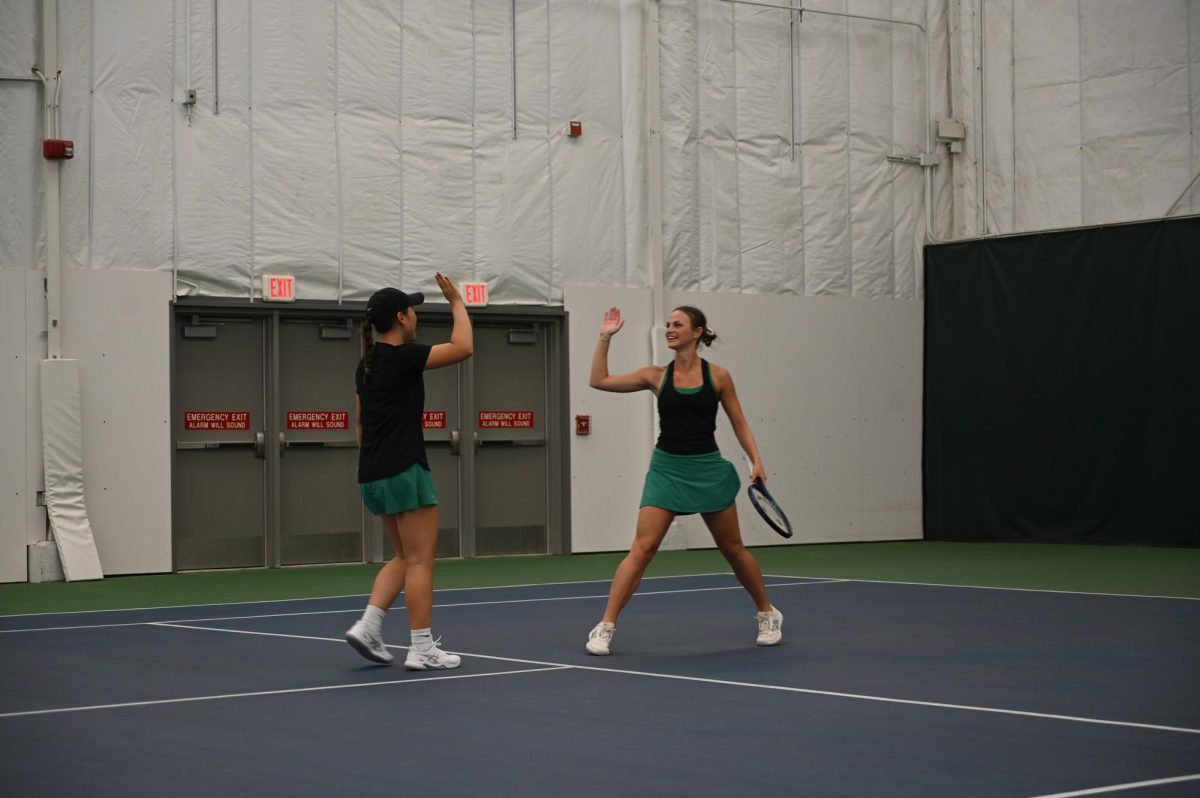
As players juggle school, tennis and social life, Crawford seeks a healthy balance. She fosters team spirit by carrying out specific pre-meet rituals from the spring to fall.
“It’s always nice when it’s a team huddle because then people can share their own goals without [any] pressure. It’s a lot of fun to hear what everyone has to say and what they’re excited to do or nervous about,” Crawford said. “Having fun team nights or focusing on doing activities with our team outside of tennis helps tackle burnout.”
One thing Crawford would change about the transition to the fall season is to allocate more practice time before the rapid start of competition.
“Because the Iowa Girls High School Athletic Union only allowed for [coach-led] practice to start three days before our actual competition, it was an abrupt start from not having coach-led practices to then [having] meets back-to-back,” Crawford said. “[Ideally], a grace period in the spring [where] there are two weeks of practice before [the] first meet [would help].”
Crawford also mentions that the team dynamic has changed this season due to the increased consecutive time spent with each other on and off the court.
“We’ve spent a lot of time together [between] summer conditionings, summer practices and doubleheaders. I definitely think this team has grown a lot closer because of it. Plus, it’s a new experience that everyone goes through together,” Crawford said.
Overall, Crawford views the switch as advantageous for the team and has been pleasantly surprised by how enjoyable it has been.
“[The switch] made it easier to practice and train with teammates and have everyone come [and not be] stressed with school,” Crawford said. “I’m always eager for school to start, so it’s fun to fill my time with something school-affiliated, like a fall sport.”
Boulton highlights how the switch has improved preparation and playing conditions for student athletes who no longer.
“Coaches can have contact with players in the summer, which they can’t in the winter. That means athletes can receive instruction and be at their best earlier in the season. They’re not playing in cold, 40-degree weather, [so] playing in the fall has been a positive shift,” Boulton said.

