


“I didn’t know it was crazy hair day today.” An elementary insult, but hurtful nonetheless.
Many can relate to frizz or bad hair days, but for some, it’s more than just an “off day.” Textured hair, whether it’s wavy, curly or coily, is stereotyped as dirty or unruly: something to be tied up and hidden away.
Ayla DeWeese ’28 heard this exact insult from a friend during second grade, at a time when she was already struggling with her hair.
“I was just so against my hair, like I wouldn’t brush it,” she said. “In the cafeteria with my friends, one of them went, ‘I didn’t know it was crazy hair day today.’ It actually upset me so bad, I crashed out.”
Her hair is naturally curly, but she straightens it every day. “I don’t really know how to style my natural hair, and I just don’t like how it looks on me,” she said.
Although people have used wigs and irons to create artificial curls for centuries, naturally textured hair has only begun to be accepted and embraced relatively recently, growing alongside civil rights movements and pop culture moments.
Still, although curly hair is more accepted now, it still isn’t mainstream. Those same tools are now used to straighten hair or hide texture. Actors Jack Rippentrop ’27 and Ceci Chisolm ’28 have experienced this firsthand, losing their curls while getting into character for theater.
“They still don’t know how to really deal with my hair, except for Sara [Abou Alaiwa ’29]. But they just don’t know how to work with curly hair,” Rippentrop said. “Genna would straighten my hair with an iron before the shows. But Sara just gets it wet, and then you slick it back, and it’ll just be straight. For some reason, no one back then had curly hair.”
“It’s kind of been like an ongoing struggle as like a person of color in theater, because there’s never really a set idea for hair. It’s either, ‘Can you straighten it? Can you wear a wig?’” Chisholm said.
It’s hard to style textured hair, especially another’s. However, through trial, error and more than a little advice, many have started to discover their natural hair type and a routine that works for them.
“I saw all my other friends; they were predominantly white girls, and they had straight hair. So I always wanted my hair straightened, especially for special occasions,” Rowan Hamza ’26 said. “I didn’t have a really good relationship with my hair up until I started using social media.”
“I started seeing other people with the same hair as me, and they made it look really nice. So I started using the same routine, and then I started to like my hair more,” she said.
“I would always look up ‘natural hair’ [and] search up my hair type as well. And then when I would see posts like that, or with girls that looked like me, it just sparked my inspiration to do my hair more,” Hamza said.
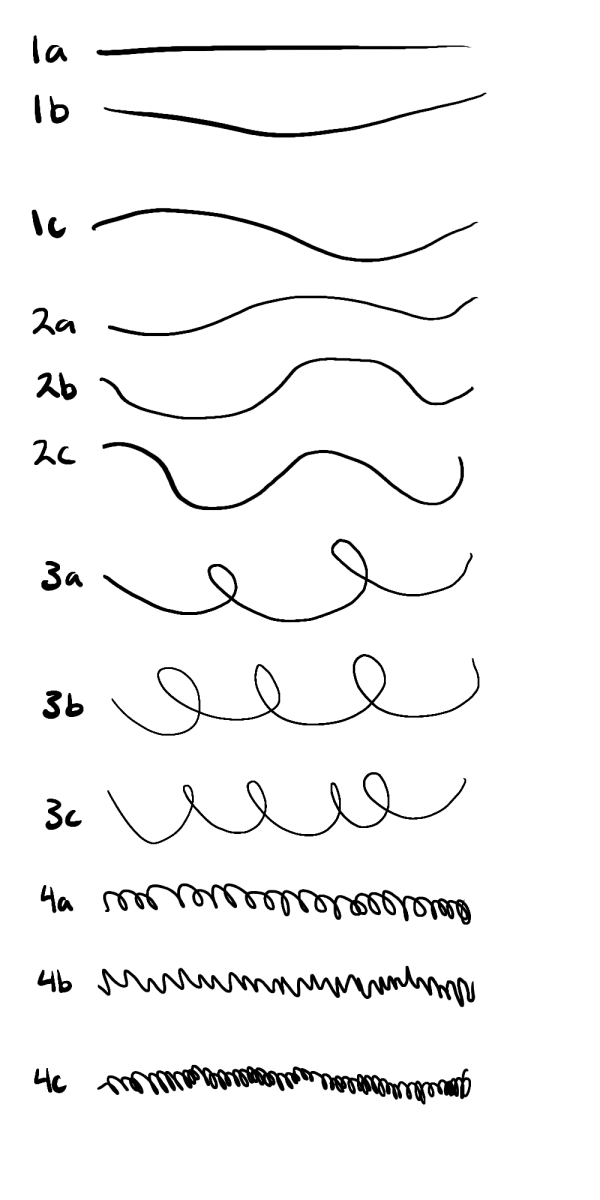
The “curly girl method” was a huge trend on TikTok and other social media after hairstylist Lorraine Massey introduced it in her book “CurlyGirl: The Handbook.” Despite its name, the method is a general routine designed for all hair types and any gender: cleanse, condition and style.
“I didn’t really use to take care of it. I wouldn’t use the right products, so I’ll just go with whatever is usually the cheapest,” she said.
Through her research and online inspiration, Hamza found a new perspective on her hair. “But then I found out that there’s different things that go into curly hair, like your porosity, the length and the texture and stuff, and then everything changed,” she said.
Hamza isn’t alone in her journey: Jayden Tyler-Smith ’29 also took inspiration from social media and TikTok. “For a long time, I didn’t really know how to take care of it, and it was hard to wear it out. But I think recently, I’ve learned how to take care of it, and it’s worked way better,” he said.
With the overwhelming popularity of the curly girl method and other curly hair trends, some started to overcorrect. The term “curly hair police” was coined online to describe people who questioned others’ hair types or gatekept textured hair.
“People will ask if I’m wearing a wig. It was summer camp, and I’d woken up early and [there was] a little curl my hair. I was super happy and someone was like, ‘Did you put on a wig? Or, like, do you wear wigs?’ No, I just have curly hair, and I put it in a bun or a ponytail the day before. So I don’t know, stuff like that, or asking, ‘Oh, did you take a long time to curl it,’ assuming it was with an iron or something,” Imogen Olzewski ’29 said.
Still, despite opposition from both straight and textured hair types, people with curly hair continue to find new ways to style it and the confidence to show their natural self.
“It’s something that I really like, I love the way it looks and makes me feel like I have something special,” Olzewski said. “If you have curly hair, I’ve never seen curly hair look bad, so just embrace it.”