














The whiz of a paper airplane, the hum of motors and the lively chatter of elementary school students fill the gym during a Before and After School Program — an unusual yet energetic scene for an otherwise ordinary Wednesday afternoon. STEM for Youth, West’s volunteer-based organization dedicated to bridging STEM disparities across schools through interactive science education, hosted two joint science programs. An estimated 160 elementary school students participated in the programs led by 37 STEM for Youth volunteers.
Hosted March 4 at Coralville Central Elementary, the first STEM program featured an aerodynamics and rocketry theme. Lessons were reinforced by three activities: aerodynamics kits, astrodynamics kits and green hydrogen kits provided free of charge by Engineering Tomorrow, a nonprofit organization aimed at providing no-cost labs to students. STEM for Youth’s co-secretary, Momo Shinozaki ’27, led the astrodynamics engineering event, and cites how gratifying it was to expose the students to the content.
“I really enjoyed being a part of the STEM workshop on the no-school day,” Shinozaki said. “It was really wholesome to see how excited and motivated the kids were to launch their balloon rockets.”
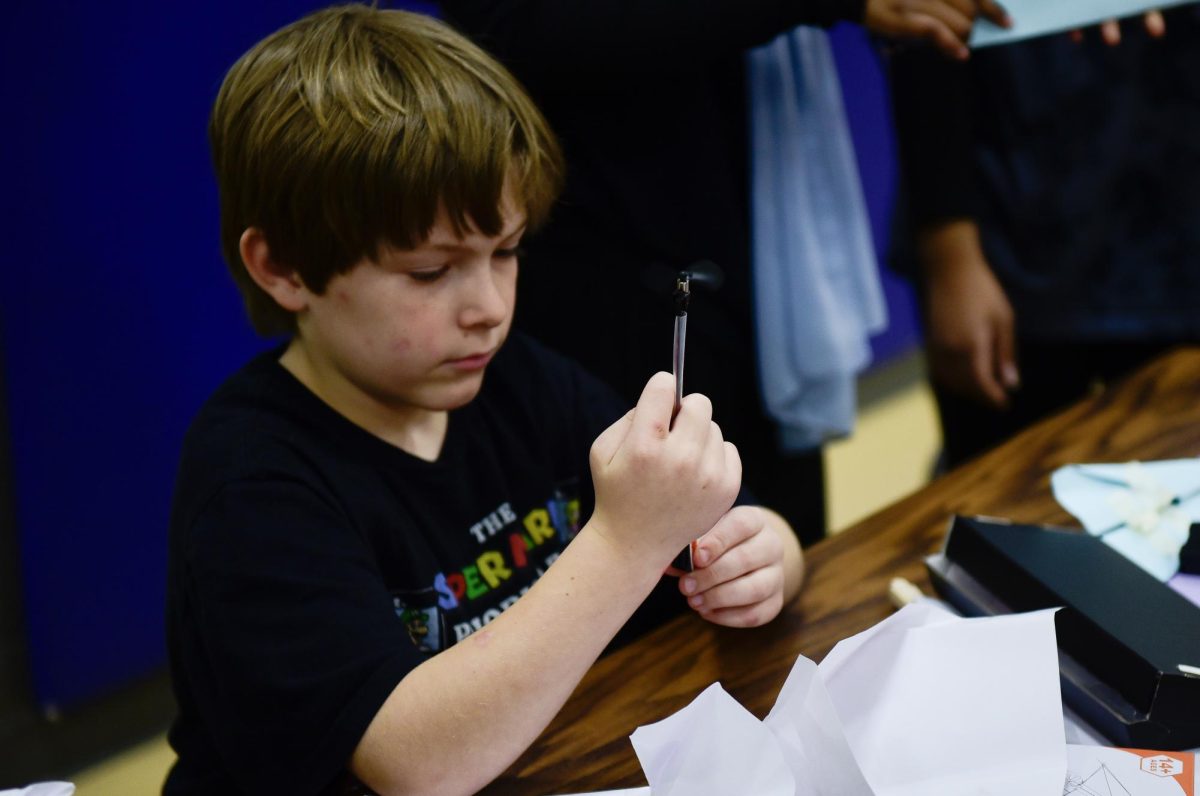
A week later, volunteers spearheaded the second STEM program across Coralville Central, Borlaug and Wickham Elementary Schools. Dismissed from seventh period, the volunteers set up and hosted the events based on a structural engineering theme. The program began with a large presentation to spark group discussion, followed by three activity stations to promote hands-on, experiential learning. The activities, however, were competition-based, which encouraged students to actively participate and work collaboratively.
Volunteers and students worked together to create marshmallow-spaghetti towers for the first activity, with the objective of creating the tallest tower with the greatest amount of structural integrity. Students were encouraged to reference real-world examples to build a sound structure.
The second activity stemmed around engineering penny floats. Students learned about the principle of density, and thus tinkered with constrained materials to create large — yet light — boats that could carry the most weight.
The last activity involved bridge-building, where students utilized civil engineering principles to successfully create model bridges that could sustain the most weight. Volunteers taught students about the trusses to support the weight evenly across the bridge.
Shinozaki volunteered at the Borlaug Elementary program, and found that the competitive aspect of the event made it especially engaging for the students.
“It’s always so rewarding being able to come back to the elementary school I went to and do STEM activities with the kids,” Shinozaki said. “It’s really exciting to see how competitive they got to see whose bridge can hold the most weight, and it’s really special that I get to be a part of a program that encourages kids to test their ideas.”
Overall, both STEM programs lasted roughly an hour, and prizes were awarded to the winning teams at the conclusion of the program. The events marked STEM for Youth’s third and fourth STEM programs for the 2025-26 school year.