

































Inappropriate messaging between users, especially between adults and minors, has long been a problem on various internet platforms, with a notable example being Roblox. However, many such platforms have taken a blunt approach to solving this issue that raises many concerns regarding privacy and effective enforcement.
On Nov. 18, 2025, Roblox announced that users in Australia, the Netherlands and New Zealand would be required to have their face scanned by Persona Identities’s age estimation AI to use social features such as text and voice chat, with these facial scans and chat restrictions having rolled out globally as of January 2026.
Within the new chat restrictions, users classified within an age group can only chat with other users who are within adjacent age groups. For example the 9-12 year old age group can talk to the under-9, 9-12 and 13-15 age groups.
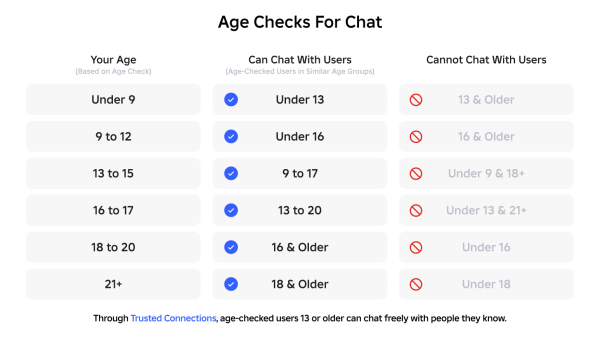
These age verifications have frequently gotten the ages of users wrong, leading to frustration with users not being able to chat with their peers, siblings or trusted people outside of their age group.
Source for quote
The age restrictions have left Roblox feeling like a “ghost town,” with users unable to chat with a large number of their fellow players in-game. Moderators of in-game experiences have also reported being unable to see the chats of and communicate with players outside of their age group, defeating the purpose of being a moderator. Roblox has announced plans to roll out ways for moderators to bypass this restriction in March.
The age verification has also proved to be incredibly easy to fool, with minors drawing mustaches on their face to get into adult age groups, and users using videos or video games instead of their real face. WIRED found eBay listings selling accounts that were verified to be underage, presumably targeting child predators wanting access to those chatting age groups.
In the United Kingdom, in order to comply with the Online Safety Act of 2023, which requires companies to age-verify users in order to access harmful content, Discord implemented similar face scanning via k-ID. Users have found similar methods of fooling the age estimation, with one Twitter user reporting that they were able to use the photo mode in the video game “Death Stranding 2.”
Aside from the age verification being easy to fool and frequently being wrong, age verification via face scans and/or ID verification also poses a serious privacy and security risk for users. Persona Identities is currently being sued for illegally retaining the biometric information of DoorDash drivers in Illinois. 5CA, which provides customer support for Discord, was breached in October 2025, leaking 1.5 petabytes of improperly retained age verification data from users in the UK, including over 70,000 government IDs. Tea Dating Advice, an app that allowed women to do background checks and see “red flags” on potential partners, was breached in July 2025, leaking the selfies and driver’s licenses users used to verify they were real women.
Despite their previous data breach with their age verification system, Discord announced Feb. 9 that it would also require age verification globally, with large pushback from users. Although Discord initially started rolling age verification out with k-ID as their provider, security researchers were able to spoof data being sent from user devices to k-ID’s servers and fake an adult age, so Discord is experimenting with using Persona Identities instead, which streams camera data instead of doing on-device processing.
Despite the ethical and privacy concerns of automated age estimation systems, governments around the world are pushing forward with enforcing age restrictions. The UK Parliament has denied a petition to reverse the Online Safety Act, and Australia’s similarly named act has companies “kicking and screaming” trying to push back against the act, according to the country’s eSafety Commissioner Julie Inman Grant. In the US, many states have introduced or passed similar laws requiring age restrictions for social media and adult content sites, creating similar pushback from users and companies.
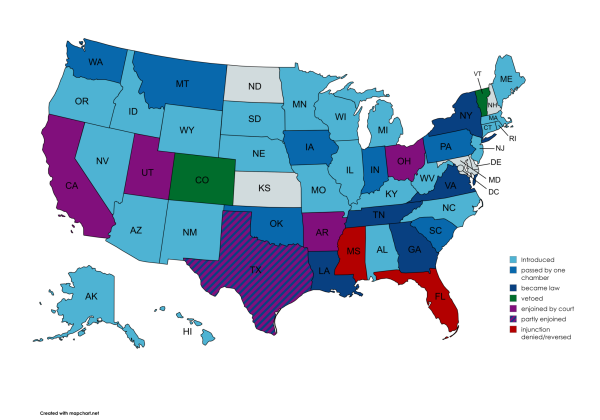
The push by governments to mandate age verification is being fought against by companies and users, but government officials aren’t fazed by this pushback and continue to roll out mandatory age verification.