
































Spoilers ahead.
To call this a book-to-movie adaptation would be inherently wrong.
There have been over 30 different film and television adaptations of the classic Emily Brontë novel “Wuthering Heights.” Released in theaters Feb. 13, this modern remake directed by Emerald Fennell has gained popularity both in theaters and on social media. However, this movie fell short of excellence, disappointing those, including myself, who were anticipating a book-accurate depiction of the story. It lacks the gothic ruthlessness, the haunting obsession and vengeance of the original book. For those who separate the two pieces, this movie might seem either enjoyable or discomforting.
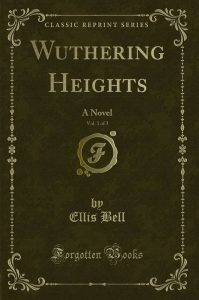
The original book follows Catherine (Cathy) Earnshaw and the orphaned boy her family takes in, Heathcliff. They form an unhealthy, fanatical relationship, but are forbidden to be together. After Cathy marries the wealthy Edgar Linton, Heathcliff disappears and returns with the sole purpose of tormenting the future Earnshaw and Linton generations in revenge. The second half of the book, which is often omitted from films, begins after Cathy’s death. This details the lives of Cathy’s daughter, whom she had with Linton, and her nephew. The two fall in love despite facing Heathcliff’s wrath. In the end, their love prevails and the cycle of abuse and conflict between the two families ends.
Fennell has taken the dark, twisted story curated by Emily Brontë and watered it down into a passable romance. The book was centered on revenge, society and toxic obsession. In comparison, the movie focuses on love and an evident sex factor.
Fennell’s film discography features other movies such as “Saltburn” and “Promising Young Woman.” She orchestrates movies with deep and slightly shocking sexual themes, many of which have often been labeled as disturbing. “Wuthering Heights” is no different.
What went wrong
The underlying tones of the book versus the movie felt incredibly distant from each other. We still experience the tumultuous relationship between Cathy and Heathcliff, yet elements are missing. When Cathy and Heathcliff first meet, there is a budding romance between them. However, the movie focuses on specific sexual scenes that start their tryst. We feel the sexual tension before any emotional tension. There is a slight, implicit mention of intimacy in the book, but the film’s screenwriters decided to showcase this instead. There’s no ghostly hauntings, no spiritual connections. Their bond feels different, not around an unhealthy and grueling obsession, but rather a sex-oriented love.
Understandably, the movie only covers the first half of the book. This complex story couldn’t fit into a movie under four hours. The movie ends with Cathy’s death and doesn’t explore the events that unfold afterward. In the book, Heathcliff becomes a toxic and, truthfully, an unbearable antagonist. Because he loses Cathy, he inflicts his pain on everyone around him, including Cathy’s young daughter, also named Cathy. In the book, he uses his own son to torture young Cathy and obtain property.
There is one particular chapter in the book where Heathcliff traps Cathy’s daughter and a side character, Nelly, at Wuthering Heights. Here, Heathcliff abuses and assaults the two, forcing the daughter of his former lover to marry his son. There are no feelings of genuine disgust and disdain elicited by the movie’s version of Heathcliff.
We don’t get to witness the violence and havoc that he brings. Instead, audiences swoon over lead actor Jacob Elordi, and don’t experience the true, cruel nature of the main male character.

Jacob Elordi’s role as Heathcliff stirred controversy because of his appearance. In the original book, Heathcliff is racially ambiguous, yet described as dark-skinned. Elordi’s looks contrast starkly how Heathcliff is imagined. This major difference did cause some disappointment for me, as his acting was also subpar. His expressions often lacked emotion, whether it was cruelty or affection. Hardly any of his scenes left lasting impressions of heartache or despair, making his performance tedious.
Other things were tweaked, such as ages; the two main characters are aged up in the movie. In the first half of the novel, Cathy and Heathcliff were still young adults, around 18 or 19 years old. There is not as much of a time gap between Heathcliff’s leaving and Cathy’s marriage to Linton as suggested in the movie. It was much easier to stomach Cathy being wed to Linton at an older age, but that aspect was lost.
What went well
Despite this, other acting performances were still impressive. Margot Robbie’s portrayal of a depressed, dying woman after losing her child and her will to live was unforgettable. From her facial expressions to how she delivered her lines, I thought she played a near-perfect Cathy. My only critique here is the maturity level of Cathy. In the book, she often makes rash decisions and acts immaturely because she is still an adolescent. There’s much less sympathy garnered than there would be with a younger, more vulnerable Cathy.
Hong Chau performed excellently as Nelly, Cathy’s personal aide. In the novel, Nelly is a housekeeper and the primary narrator, as she is relaying the events of the story to a visitor. I interpreted her as an unreliable and flawed narrator, who acts in protective ways to help the people she cares about; these mainly being Cathy and her daughter. However, the movie writers turned Nelly into more of a villain, with her deliberately keeping Heathcliff and Cathy apart. Instead of giving her character depth and presenting her as a neutral figure, we get the manipulative and meddlesome side. I didn’t mind this, but I would have liked to see the complexities of her that are shown in the book.
Despite the major differences in plot points, casting and themes, the movie was very visually appealing.
The movie maintains the same dark, gothic tones. The cinematography was excellent, with captivating depictions and symbolic scenes. Scenes where Heathcliff and Cathy meet in the stormy, desolate moors represent their intense relationship. The lighting was very dark, as much of the movie took place in the moor and in the Victorian-era farmhouse of Wuthering Heights, yet it captured the moody spirit of the movie.
One alteration that I found fascinating, yet unsettling, was the creation of the “skin room” for Cathy in Linton’s mansion. In the book, her room is described as bare and box-like. However, the cinematographers chose to adapt this, instead making a room with walls the same color as Cathy’s skin, detailing everything: veins, beauty marks and freckles. It was skin-crawling but stylistically different, which I liked. The scene in which Cathy dies in this room was particularly evocative, with the leeches crawling from her bed and symbolizing decay.
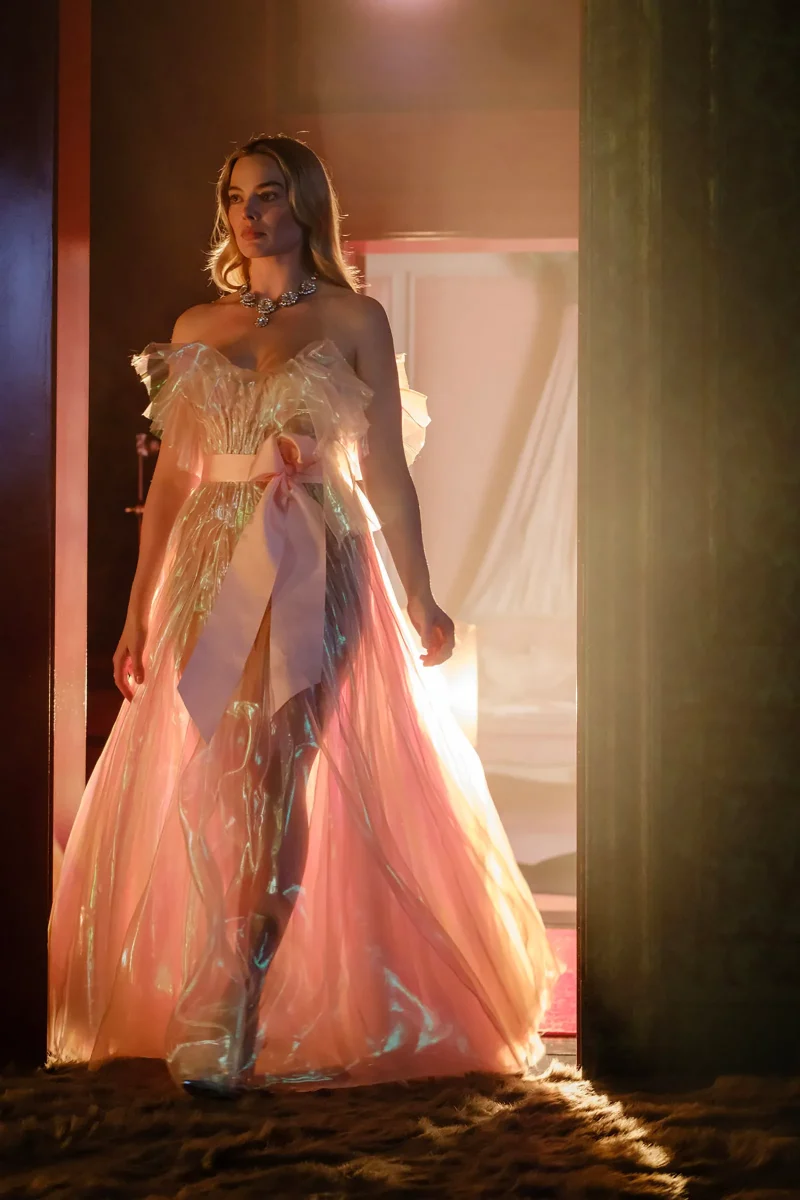
Initially, I was skeptical and slightly disappointed about the costume choices. For a period piece, they are not very historically accurate. However, I believe that the colorful dresses were a nice contrast to the otherwise dark and drab setting. Even though Cathy’s dresses that appear to be made of latex and cellophane aren’t Victorian, I didn’t mind the inconsistencies there.
I was pleasantly surprised by the music for this movie. The film’s soundtrack was created by Charli XCX, known primarily for her upbeat pop music. However, several songs fit the gothic mood very well, incorporating the eerie tone. A personal favorite was “Always Everywhere,” a slower ballad that has meaningful lyrics and a beautiful instrumental.
To sum it up, this movie was very deserving of the 57% rating on Rotten Tomatoes. It failed to capture the essence of Brontë’s book: dark, gothic and toxic. The book is a very angry, hard-to-stomach read. While the movie is disturbing, it is disturbing in an entirely different way than the book, which makes the viewer’s interpretations so contrasting. If audiences go into this movie expecting an exemplary film that stays accurate to the classic book, they will be greatly disappointed. If seeking a cringy, steamy movie about a relationship’s demise, this will fit just right.