
































Few authors have seen as many of their stories adapted for the big screen as Stephen King. Outnumbered only by all-time greats such as Charles Dickens and William Shakespeare, the legendary horror, science fiction and fantasy writer has seen his writing inspire more than 50 films and countless television shows, including classics like “The Shining,” “Stand By Me” and “IT.”
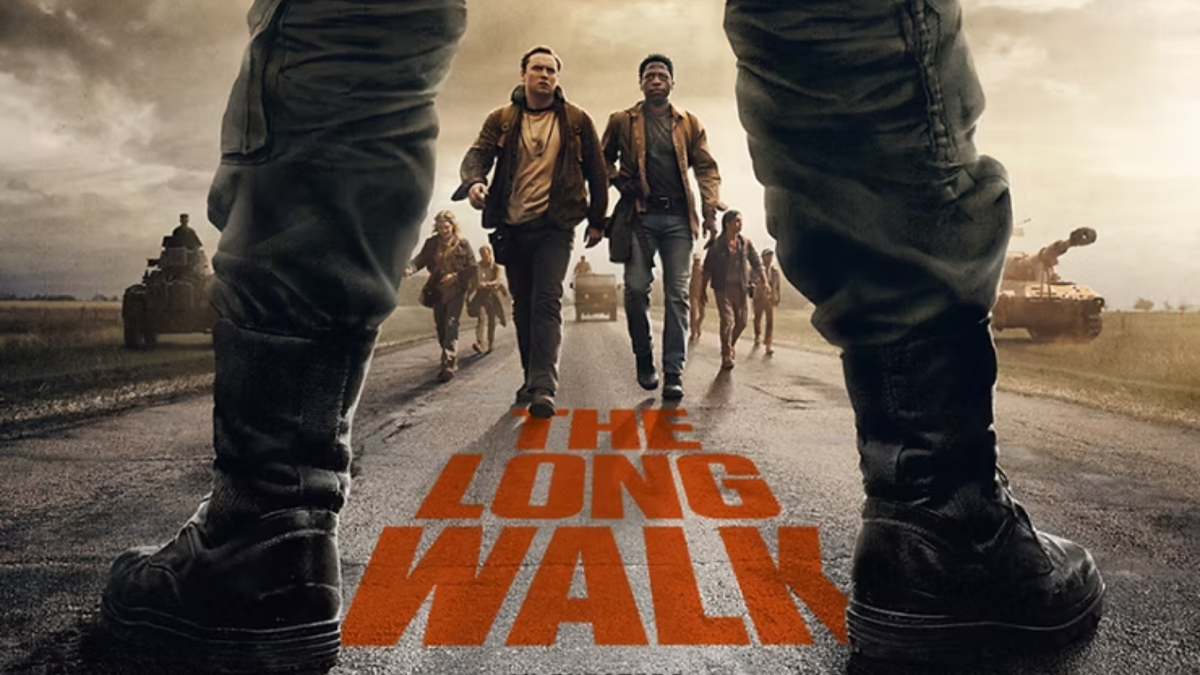
And just nine days before his 78th birthday, King added one more movie to his massive list of adaptations: “The Long Walk,” directed by Francis Lawrence and released on Sept. 12, 2025.
The movie, based on King’s book of the same title, follows the titular government-organized competition known as the Long Walk. The rules are simple: all walkers must maintain a speed of at least four miles per hour (changed to a far more realistic three in the film) or receive a warning.
If a walker receives three warnings, they are eliminated—shot without mercy by the soldiers escorting the walkers. The Walk continues until only one walker remains, at which point they receive a massive cash prize and one wish granted by the government.
With such a straightforward premise, the movie adaptation could easily have descended into a disappointing cycle of boredom and repetition. However, “The Long Walk” rises far above the drudgery its title might evoke; the film genuinely engaged me with brilliant characters and suffocating tension from start to finish.
This article contains spoilers.
The walkers
Featuring few setting changes beyond the weather and a straightforward plot, “The Long Walk” is a movie carried largely by excellent dialogue and tremendous performances from its cast.
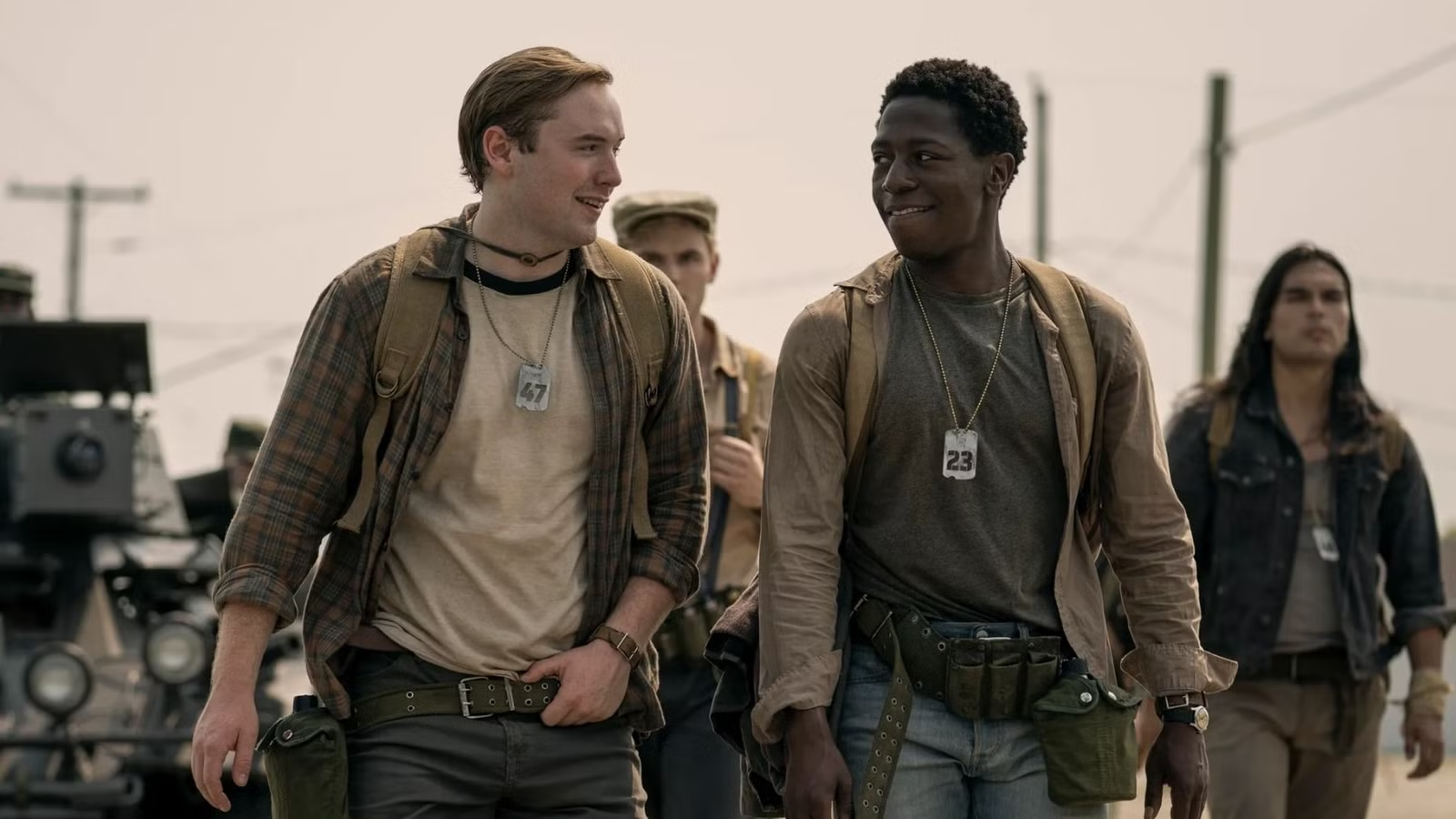
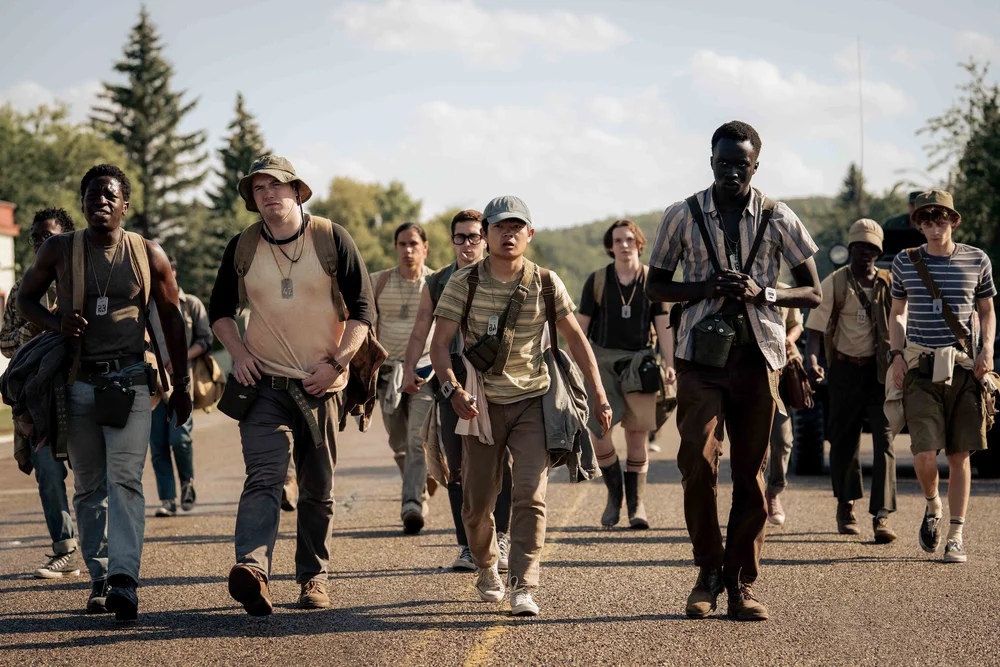
Costars Cooper Hoffman and David Jonsson do fantastic jobs as Ray Garraty and Peter McVries, respectively: the central characters of the film. Their philosophical conversations and growing brotherhood amidst the bleakness of the Walk were the backbone of the story and contributed to the crushing ending of this already depressing movie.
Jonsson especially impressed me with his portrayal of McVries, whose unique blend of optimism and existentialism in the face of the Long Walk’s cruelty and the general desolation of a post-war America made him one of my favorite characters.
The supporting cast of “The Long Walk” is no less important, with King having created a bevy of memorable characters for Lawrence to choose from. I thought the movie was very well cast, which was another of its most noticeable strengths.
Highlights included Joshua Odjick inspiring his fellow walkers as the pugnacious, defiant Collie Parker, Ben Wang perfectly playing out Hank Olson’s initial bravado and subsequent decline into hollowness and exhaustion and Tut Nyuot’s Arthur Baker possessing an earnestness and contemplation that make his death one of the most heartbreaking of the film.
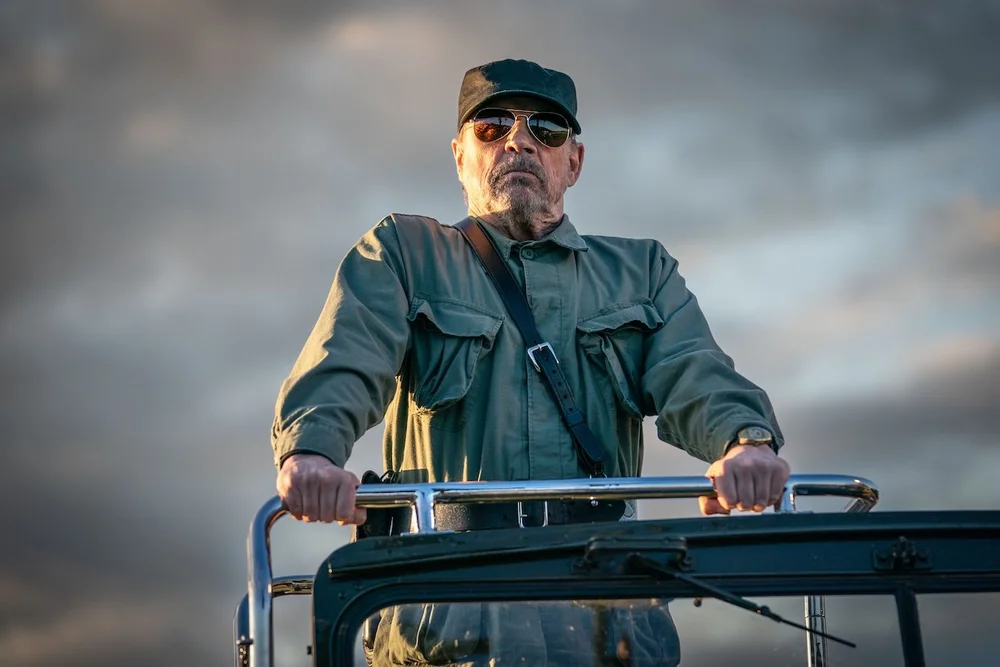
The Major, a government official and the face of the Long Walk, was another standout performance. Although portrayed by Mark Hamill of “Star Wars” fame, there’s no light side compassion in this character: Hamill plays a perfect cold, menacing antagonist to the walkers, going from a loved propaganda figure to a hated villain over the span of the movie.
While the characters aren’t fleshed out as thoroughly within the movie’s less-than-two-hour runtime, their arcs retain the staggering impact they have in the book, and their inevitable deaths hurt me accordingly.
Tension and violence
Oftentimes, in no small part due to its author’s reputation, “The Long Walk” is awkwardly stuffed into the horror genre alongside many of King’s other, more easily defined works. However, the film, which lacks the traditional jumpscares and terrified screaming of a typical horror movie, is better advertised as a psychological thriller, sustained by the slowly mounting dread and hopelessness that builds throughout the entire film.
Principal to this interpretation is the walkers’ slow realization of the true nature of the Long Walk. Throughout the 350 miles of the competition, each character slowly comes to terms with the meaningless cruelty of the Walk and the government’s use of them as sacrifices for its own agenda.
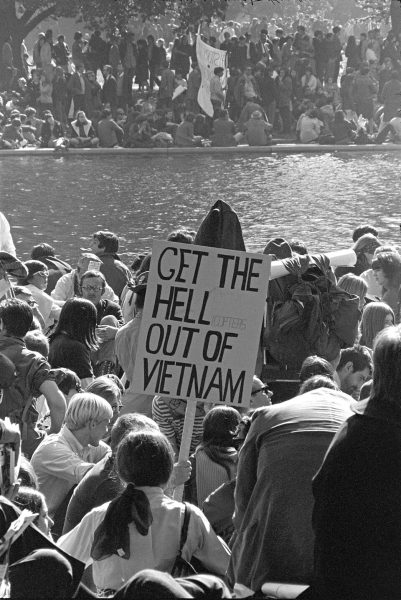
As a story purportedly written as King’s reaction to the televised propaganda of the Vietnam War draft, the symbolism is obvious—the highly broadcasted Walk is justified by the government as a solution to the “epidemic of laziness” following a great war. However, the walkers begin to realize the utter needlessness of it all as their friends die around them, contributing to a feeling of futility and remorse as the Walk progresses.
The tension is also built incredibly well over the course of the film. The soldiers’ sharp warnings, always repeated just as the movie lulls, become a refrain that never loses its effect. Meanwhile, the stark grimness of executions and the walkers’ hopelessness at their building fatigue, juxtaposed with the rising defiance of the competitors, makes for a compelling experience.
It’s partly because of the walkers’ growing disillusionment in the Walk that the deaths in “The Long Walk” hit so hard, but the sound design, visuals and character development also contribute to their disturbing nature. Perhaps the most horror-like aspect of the film, the level of violence, is something to consider before watching.
The walkers routinely use the phrase “get one’s ticket punched” to ambiguously describe the state-sponsored execution following three warnings, but don’t expect Lawrence to shy away from depicting the brutality of the competition. Several of the characters are shot point-blank by soldiers or meet other gut-wrenching ends shown on screen in upsetting detail, and the movie is rightfully disturbing given its subject matter.
Despite its repetitive nature, the violence doesn’t cheapen over the course of the movie. Lawrence justifies his use of on-screen gore with the shattering impact of each character’s death. I found myself genuinely grieving for characters like Baker and Olson (especially after learning about his wife), whose backstories had the opportunity to be developed before their deaths.
I would avoid “The Long Walk” if you’re someone who doesn’t care for on-screen violence, as simply closing your eyes negates most of the film’s bleak message. The gruesomeness is a necessary part of the storytelling (and King’s main stipulation regarding the movie), but Lawrence uses it to great effect.
How well is “The Long Walk” adapted?
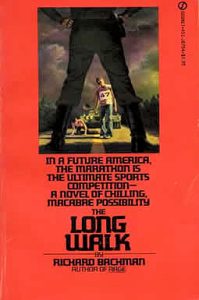
A chief concern of any film adaptation is its faithfulness to the source material, and I think “The Long Walk” does the best it can with a relatively bare-bones plot and simple premise.
Stretching a 350-mile walk into an almost two-hour movie without making it unbearably boring is a feat in and of itself, and Lawrence accomplishes this task masterfully. He uses the aforementioned violence and developing character relationships to keep tension building throughout the film while preserving many of the aspects of the book.
But while he retains most of the original plot and characters, Lawrence makes several noteworthy departures from King’s book.
Firstly, several plot and worldbuilding details were altered in the movie, mostly to improve the story’s translation to the movie format. As previously mentioned, the walking speed was lowered from four miles per hour (a brisk half-jog) to three, which definitely appears better on the big screen.
The starting amount of walkers was also lowered from 100 to 50, which is a fairly minor change that allowed Lawrence to keep the cast of characters smaller and more personal. Some characters from the book were left out and saw their traits divided among the included characters, or were simply erased entirely.
But perhaps the most noticeable alteration of the source material is the race-swapping of many of the book’s core characters. While McVries is described as white (an “olive-skinned” boy) in the book, Jonsson is Black, and several other originally white characters were also changed: Olson is played by Wang, who is Chinese, Arthur Baker and Collie Parker are changed to be Black and Native American, respectively, and others are also race-swapped.
However, while this change seems significant and perhaps unnecessary in some people’s eyes, I didn’t think it really changed the essence of the book.
None of the characters’ races are really mentioned or remarked upon in the book past their initial introduction, and in a story where the characters are so important, I believe Lawrence simply cast the right people for the job. All the actors did fantastic jobs portraying their characters, and the change brought diversity to the Long Walk that honestly made it more believable in modern America.
Another sizeable change is the removal of a lot of the sexual material present in the book. In a book almost exclusively involving 18-year-old boys in a heightened emotional environment, it’s unsurprising that King wrote several passages that overtly involve sexual content of some kind. Lawrence takes a much more toned-down approach, electing to remove most of the mentions of sex (although the movie is still heavy on expletives) from the film.
A major consequence of this is the altered portrayal of McVries, who is strongly hinted to be gay in the book through his affection for Garraty. With the removal of sexual content in the film, his status is a lot more subtle, which could be interpreted as the removal of a queer character—something Hollywood has been guilty of in the past.
However, I think Jonsson’s character retains a similar dynamic with Garraty, and one could argue that the movie implies his sexuality just as strongly as the book, maintaining strong LGBTQ themes throughout.
The finish line
Despite the gruesome violence and bleakness of the plot, the ending of “The Long Walk” was what really cemented this movie as an incredibly tough watch and a high 8.5 out of 10 for me.
Throughout the whole movie, Garraty and McVries clash philosophically over their worldviews. Garraty, filled with bitterness over the death of his father at the hands of the government, seeks to leave a message by sacrificing himself to kill the Major—the face of the machine. Meanwhile, McVries argues for him to have faith in humanity and believe in the good in life, as otherwise, everything they do is for nothing.
As one of the final two walkers, Garraty sacrifices himself so McVries can win; he firmly believes that McVries’s internal optimism is essential to making a positive change in their society. Heartbreakingly, however, his death is the final straw for McVries, who uses the wish he’s granted for winning to kill the Major in an act of defiance and rage.
His rejection of his own philosophy after Garraty’s sacrifice is a cruel irony and a significant alteration to the book’s ending, elevating Lawrence’s adaptation of “The Long Walk” beyond a simple translation of the written work.
Ultimately, Lawrence turns a depressing, disturbing and poignant book into an even more powerful film, well deserving of its 88% rating on Rotten Tomatoes. As a bleak portrayal of the futility and cruelty of life anchored by soulful performances, “The Long Walk” transcends a simple film adaptation.
It’s a great watch for anyone who appreciates a character-driven story, with incredible character development and a compelling plot. While it’s not a walk everyone is willing to take, “The Long Walk” proves unforgettable for those who stick around to the finish.