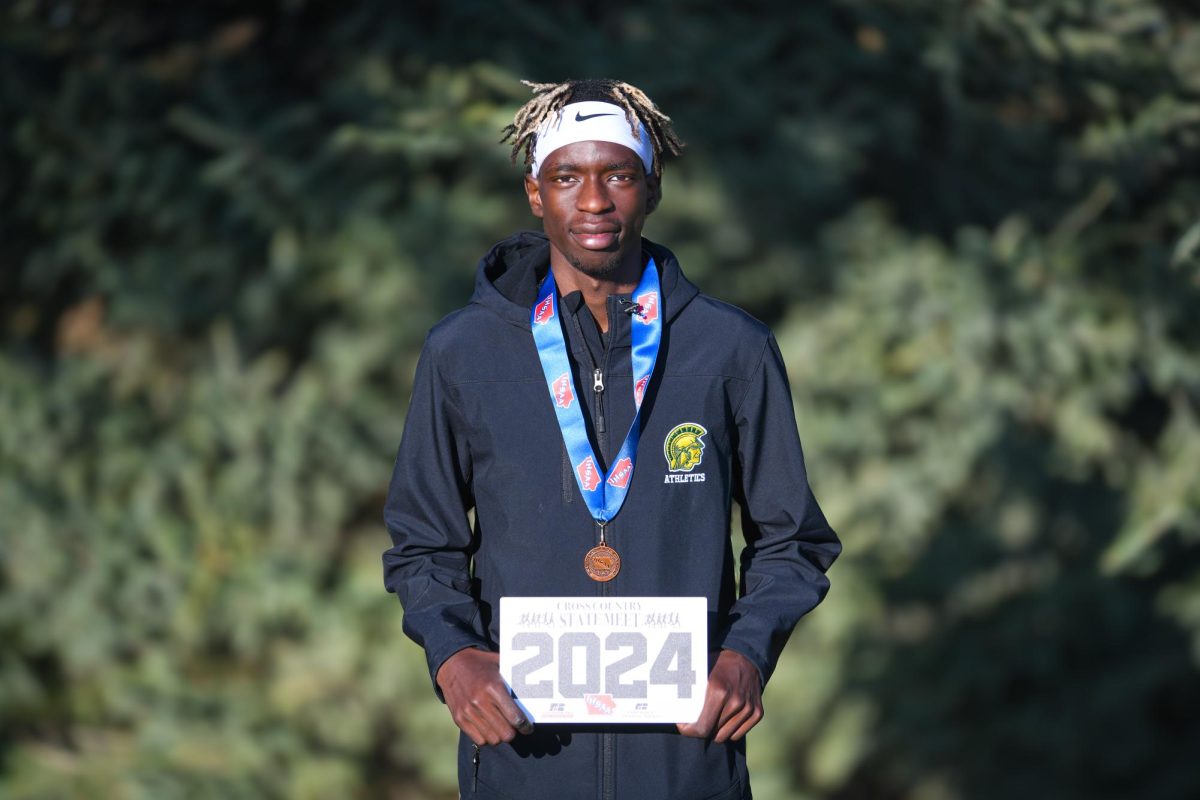






























Sophomore Abwe Kalenga has been looking to add a Biology Honors class option in addition to West’s current Biology class. He feels the regular course isn’t at a fast enough pace and does not adequately prepare students for AP Biology.
“I’m planning to take AP Bio next year, and I feel like Biology right now is not preparing me for AP Bio,” he said. “When I first went to my class, we were talking about the migration of wildebeest. How is that going to help us in AP Bio?”
For his first step, Kalenga independently sent out a Google Form to other regular biology students to assess interest in the potential class.
“I needed to know if people might support my ideas,” Kalenga said.
One respondent said, “I want a course that can also give me honors credit. I would like it to help me prepare for AP Bio and cover most AP Bio topics. It’s like AP Calculus AB and AP Calculus BC. BC is just faster-paced and more units. I want it to be the BC in that analogy.”
Erin Chen ’27 took biology her freshman year and AP Biology her sophomore year. She found it challenging to keep up with coursework and the required material for the AP test.
“I would say it was one of the more difficult classes that I’ve taken, especially because a lot of the knowledge that you learn, you have to supplement it with work at home, because some of them are just really hard to grasp,” Chen said.
She attributes her struggle in part due to her experience in Biology, which she felt did not adequately prepare her for the rigor of AP Bio. Chen felt the class only briefly touched upon many topics AP Biology required her to know in depth.
“Regular biology introduces you only to the very, very bottom baseline. It’s good to take it, but I don’t necessarily think it’s all that helpful because the jump is just such a big jump to AP Bio,” Chen said.
West biology teacher Chris Murdock feels that the current curriculum is well constructed for students to succeed. He recognizes Kalenga’s claims, but explains why the class is structured as it is.
“The focus of our biology classes that exist now is not to emphasize the scientific content. It is to emphasize the application of the science for those students that want to go into an AP course or continue a science career later in life,” Murdock said. “It’s important that you understand how to problem-solve things that you don’t know, and that can be mistaken as simplified.”
According to Murdock, West has shifted into an open science model that uses real-world phenomena to demonstrate biology principles. This type of curriculum emphasizes students to personally seek out more challenging material if they feel they can’t get it from regular classwork.
“What makes this new biology curriculum so exciting is that it allows for us to go further, for the students that want to go further, and for those that don’t need it, we don’t force them to do the extra work that might be outside of the scope of the learning targets in our class,” Murdock said.
Current biology student Thora Schimmel ’28 feels the open science model has room for improvement, namely a faster pace and diversifying the type of case studies the class offers.
“I also think teachers should more repeatedly bring up the exact purpose of the class and unit so students better understand what skill they are being assessed for,” Schimmel said.
Similar to the concerns Chen expressed, Schimmel believes much of the content in regular biology could be completed in less time and with more in-depth analysis to make it more impactful. She feels that the content, while interesting, could be taught in a way that is more engaging and preparative to students, especially those who want to pursue advanced science classes in the future.
“I doubt the bio curriculum is a sufficient prerequisite for AP Bio. Especially talking to friends who are now in AP Bio, I’ve heard there is an extremely large difference in difficulty between the two courses which concerns me slightly,” Schimmel said.
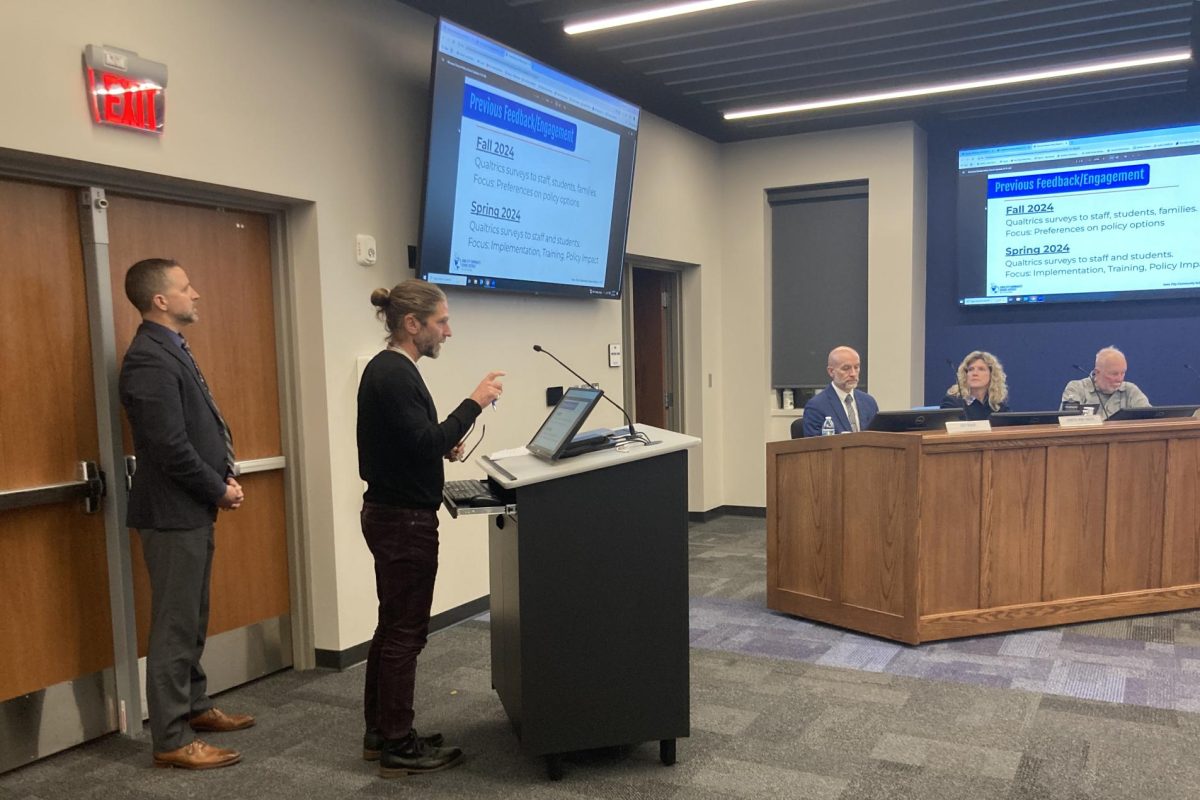
Kalenga has reached out to his counselor about officially adding the class to West’s science department but was told it would take a minimum of two years. Provided by Counselor Kelly Bergmann, the steps to adding a class to West include first talking with both a teacher and an administrator at West High.
“Ultimately, the course request goes through school administration, and eventually the district’s curriculum coordinator for that area and district administration,” Bergmann wrote in an email. “Adding coursework can be a lengthy process, as it also involves funding, staffing, etc.”
Co-district coordinator for the ICCSD high school sciences, Danielle Riney, expressed in an email interview that new courses are added based on requests processed during the curriculum review cycle.
“Course updates follow the district’s systematic curriculum evaluation process, which incorporates teacher, student, and community feedback,” Riney said. “Our School Board policy requires curriculum evaluation to be ongoing and based on comprehensive data, so courses are not changed informally.”
According to Riney, achievement data from current classes is also evaluated to gauge whether or not a course needs to be changed, but the process needs to be backed in documented experience before being considered.
Because biology is a required course, to best suit student needs, an honors biology option could better support students who want to pursue advanced classes while retaining the normal curriculum for those who don’t plan on taking AP Biology.
It’s important to note the potential downsides and the difficulties of getting a course added and developed. In addition to practical difficulties, according to Murdock, the broader basis of regular biology actually makes biology more accessible to a wider audience, while offering more advanced options.
“My challenge to anybody that thinks that honors biology would be a better solution than what we have now is to continue to ask your teacher questions, continue to to inquire about why we’re doing what we’re doing, how it applies to the world that we see around us, and what more we can be doing with it,” Murdock said.